February 12, 2026
Designing AI Agents with Human Review Loops That Actually Work
A practical framework for adding human review to AI agent workflows without slowing the whole system to a crawl.
Article focus
The best human-in-the-loop design does not ask people to review everything. It asks them to review the moments where confidence, risk, and business impact matter.
Section guide
Teams often say they want a human-in-the-loop AI system when what they really need is a safer decision path. Those are not the same thing.
If every step needs approval, the agent becomes expensive theater. If no step needs approval, the system becomes hard to trust. Good design sits between those two extremes.
Start with the failure that matters
Before adding review steps, define the failure mode that would actually hurt the business.
Examples:
- sending the wrong outbound message to a customer
- approving a workflow action that affects money or access
- summarizing internal research with missing context
That definition matters because review should be tied to risk, not to vague discomfort about AI.
Review the moments, not the whole workflow
One of the most common mistakes is putting a human review checkpoint after every agent action. That creates delay without adding much safety.
A better pattern is to review:
- low-confidence outputs
- high-impact actions
- exceptions that fall outside a known policy
- final artifacts before they leave the system
This keeps people focused on signal instead of repetitive low-value confirmation.
Three practical review models
Approval before action
Use this when the agent is about to trigger something irreversible or costly. Payment approvals, account changes, and high-stakes customer actions belong here.
Sample-based quality review
Use this when the workflow is high volume and relatively low risk. A reviewer checks a slice of outputs, watches quality drift, and tunes prompts or guardrails as needed.
Escalation on exception
Use this when the system handles normal cases well but needs help with edge cases. This is often the strongest model because it keeps human time pointed at the hardest decisions.
What reviewers need in the UI
A review interface should not only show the final answer. Reviewers need:
- the source context used by the agent
- the policy or rule the system applied
- a confidence or uncertainty signal
- the action options available next
Without that context, reviewers become guessers instead of accountable operators.
Build feedback back into the workflow
Human review only becomes leverage when the decisions improve the system over time. Capture:
- why something was rejected
- what missing context caused the mistake
- whether a policy needs to change
That turns review from a recurring cost into a training loop for prompts, routing, and guardrails.
The takeaway
Human review loops work best when they are narrow, intentional, and tied to real risk.
The goal is not to make people supervise every AI action. The goal is to design a workflow where humans step in at the moments that protect trust and improve the system.
Article FAQ
Questions readers usually ask next.
These short answers clarify the practical follow-up questions that often come after the main article.
Need a similar system?
If this article maps to a workflow your team already operates, the next step is usually a scoped review of the system, constraints, and rollout path.
Book your free workflow review here.
Related articles
View all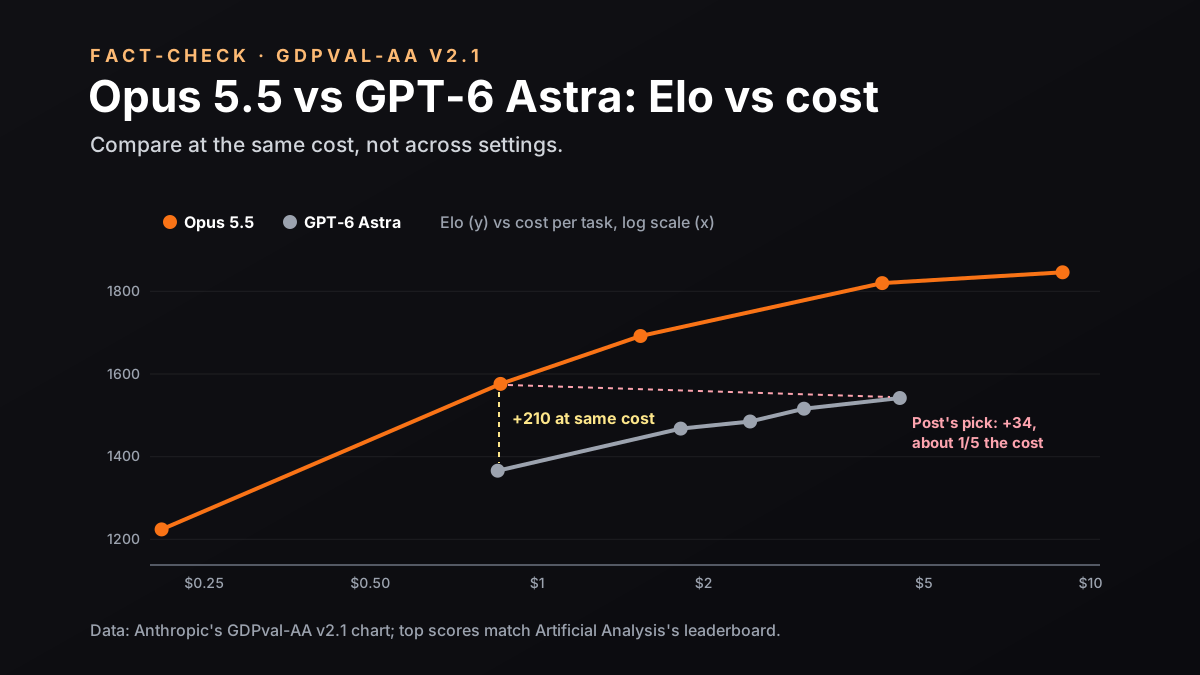
GDPval-AA Chart Fact-Check: Opus 5.5 vs GPT-6 Astra on Cost
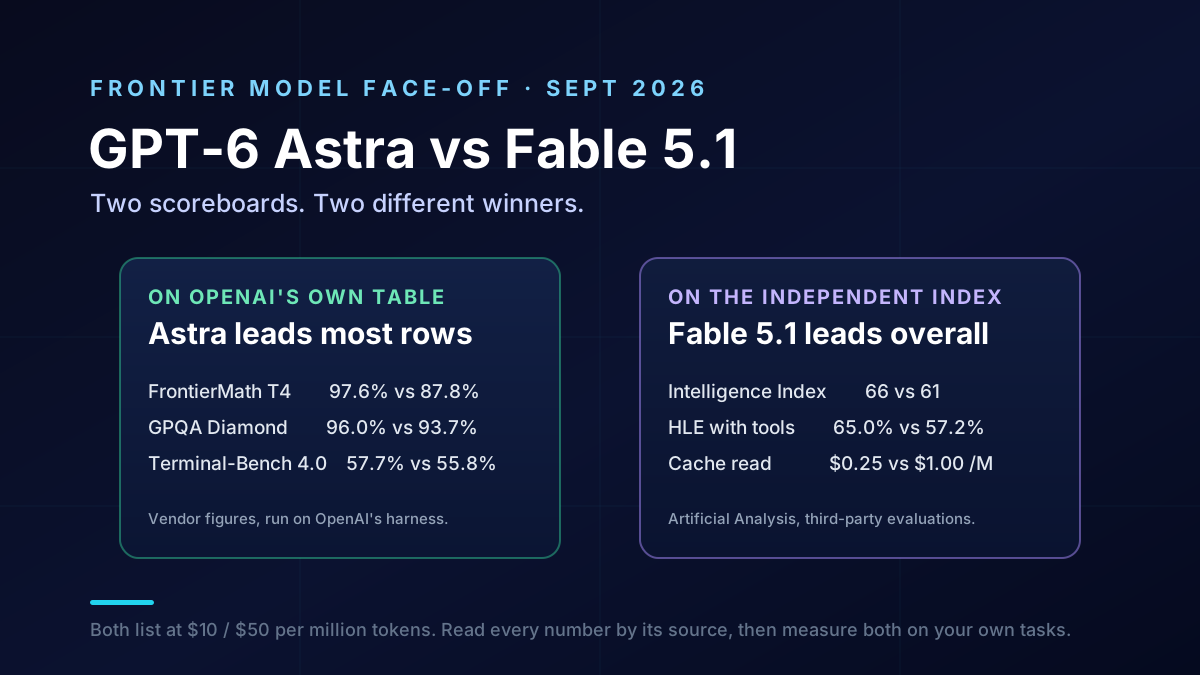
GPT-6 Astra vs Fable 5.1: Two Scoreboards, Two Winners
Computer-Use Agents: An Engineer's Production Guide