

Custom AI Agent Development Services — Shaping the Future of Intelligent Automation
Van Data Team builds production-ready AI agents that reason, call tools, and execute multi-step workflows autonomously — from workflow audit to stable production in 2 to 4 weeks.
Delivery snapshot
Production-ready from day one, not after three rounds of patches
Multi-agent coordination that stays aligned end-to-end
Guardrails, observability, and cost controls built in
Founder-led delivery with 30-day post-launch hardening
Seamless Ecosystem & Tool IntegrationProduction-Ready StandardsTransparent ROI Tracking
Six outcomes of working with Van Data Team
01
Production-ready agents from day one, not after three rounds of patches
02
Multi-agent coordination that stays aligned end-to-end
03
Guardrails and observability built in — not bolted on
04
Human-in-the-loop review at exactly the right decision points
05
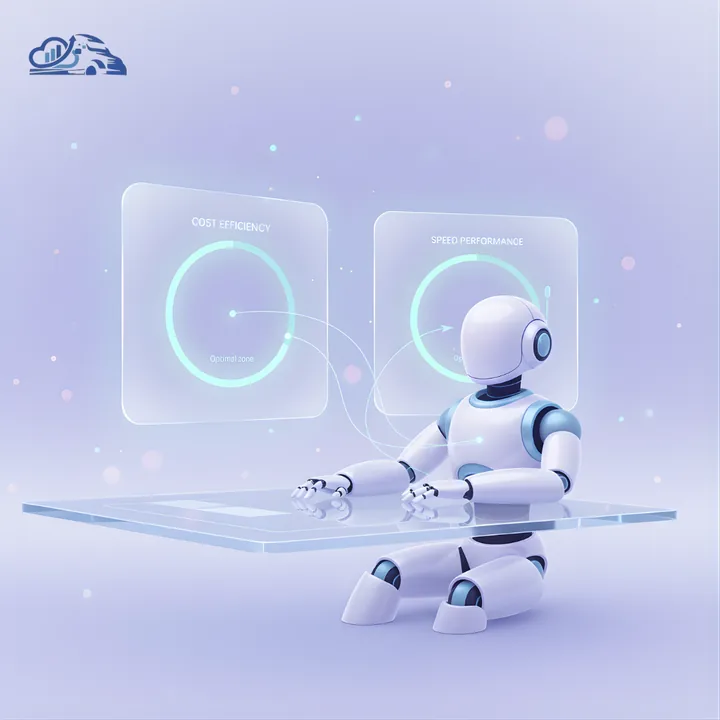
Cost and latency that stay inside defined parameters from launch day
06
Two to four weeks from workflow audit to production for scoped builds
What AI Agent Development Delivers
Scale your operations 10x without hiring, through autonomous systems that reason, call tools, and execute multi-step workflows at production-grade reliability.
AI agent development services involve designing, building, and deploying autonomous AI systems that execute multi-step workflows across tools, APIs, and data sources, without human direction at every step. VanDataTeam delivers these systems production-ready in 2 to 4 weeks, backed by a 100% Upwork Job Success Score.
A production-ready AI agent is not a chatbot with a longer prompt. It is a custom-built system that perceives inputs, reasons across multiple steps, calls tools and external APIs, coordinates with other agents, and delivers outcomes autonomously. The architecture underneath determines whether that system runs reliably in production or collapses the moment inputs become unpredictable.
Van Data Team is an AI and data engineering company specializing in AI agent development services for product teams, operators, and founders who need autonomous execution that works in the real world. Every engagement covers workflow audit, architecture design, multi-step agent implementation, production deployment, and a 30-day post-launch hardening window — led by founder Tran Tien Van from the first call through stable production.
Four structural gaps break most AI agent projects before they reach stable production: agents that pass demos but collapse under real input variation, multi-agent systems connected without explicit coordination logic, builds shipped without human-in-the-loop checkpoints at consequential decisions, and no cost or latency controls until a billing surprise forces the conversation. Van Data Team addresses all four inside a single founder-led delivery loop.
Six Pillars of Production Delivery
What AI Agent Development Delivers for Your Business
Six core delivery pillars that separate a production-ready AI agent from a system that breaks under real conditions.
01
Production-Ready Agents That Perform Under Real Conditions
A production-ready AI agent is defined by three core properties: persistent state management, graph-based conditional routing, and enforced failure boundaries. It is not a better prompt — it is a fundamentally different architecture.
Van Data Team designs for production failure modes before writing a single line of implementation. State schemas are explicit TypedDicts. Conditional routing is defined as graph edges, visible, testable, and debuggable. Retry limits, timeout thresholds, and fallback paths are enforced at the framework level. Every build is stress-tested against adversarial inputs and API failure scenarios.
Explicit TypedDict state schemas
Graph edges, not prompt-buried branching
Stress-tested against adversarial inputs
02
Multi-Agent Orchestration That Stays Coordinated End-to-End
Connecting agents is not the same as coordinating them.
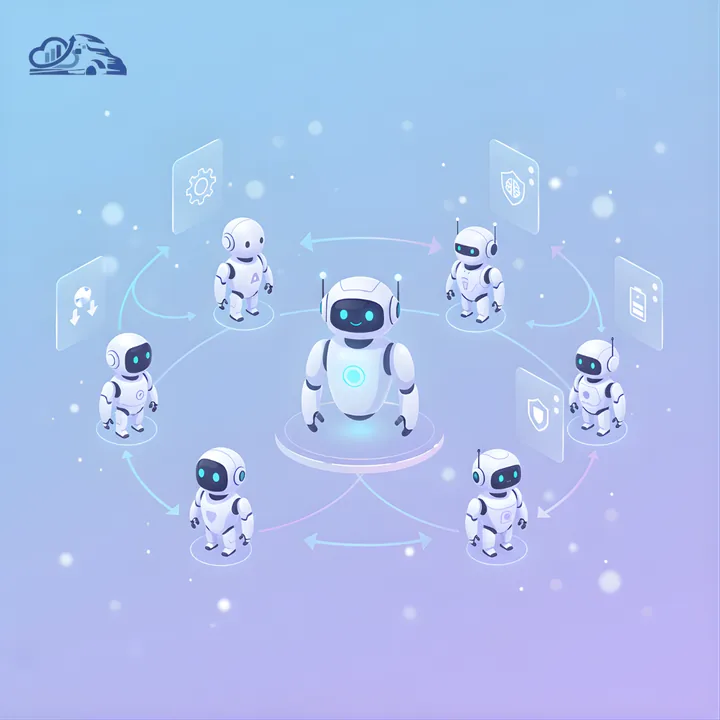
As workflows grow more complex, teams move from single-agent systems to multi-agent AI architectures involving planners, researchers, executors, and reviewers. The failure mode shifts from agent logic to coordination logic: shared state that is not actually shared, hand-off signals that get missed, task completion that both agents independently assume has already happened.
Van Data Team selects orchestration frameworks based on what the workflow actually requires. LangGraph for deterministic, auditable branching workflows. CrewAI for role-based systems with clear ownership. Hand-off protocols, shared state schemas, and task completion signals are specified during architecture and validated before any agent enters production.
LangGraph for auditable branching workflows
CrewAI for role-based coordination
Hand-off protocols validated before rollout
03
Guardrails and Full Observability Built In From Day One
An agent without observability is a system you cannot debug.
57% of organizations now have AI agents in production (LangChain State of Agent Engineering, 2025). Most operate without per-node cost visibility or execution tracing. The first signal of a problem is typically a billing anomaly or a user complaint — neither tells you where in the execution graph the failure originated.
Every production build ships with three distinct instrumentation layers: execution tracing (full node-level logging), cost instrumentation (per-run and per-node token budgets tracked in real time), and guardrail audit logging (every rule trigger with attempted action, applied constraint, and resolution path).
Node-level execution tracing
Real-time per-run cost tracking
Guardrail audit logs for every rule trigger
04
Human-in-the-Loop at Exactly the Right Decision Points
The automation boundary is a product decision, not a default.
Google Cloud's Office of the CTO identified trust, not capability, as the defining bottleneck in enterprise AI agent adoption in 2025. Builds that treat human-in-the-loop as a fallback rather than a design constraint push everything toward autonomous execution and create risk that only surfaces after it is too late.
We map the oversight boundary during the workflow audit and implement three gate types: approval gates (pause before consequential actions), escalation routing (when inputs fall outside operating parameters), and exception surfacing (retry exhaustion and out-of-scope states). Automation handles volume. Human judgment handles decisions that require it.
Approval gates before consequential actions
Escalation routing with full reasoning context
Exception surfacing with recovery context
05
Cost and Latency That Stay Inside Defined Parameters
Unbounded tool calls and uncapped retries are architecture failures.
A single retry loop triggered by a malformed API response can exhaust a workflow's daily token budget in under two minutes. Per-node latency outliers stay invisible in aggregate metrics until they degrade user experience at scale.

Van Data Team defines four cost and latency controls during architecture: hard-capped token budgets per workflow run, retry policy with exponential backoff and hard timeouts, per-node latency targets with alerting, and per-run cost tracking active from day one with automated anomaly flagging.
Hard-capped token budgets per run
Exponential backoff + hard timeouts
Anomaly-flagged per-run cost tracking
06
AI Agent Development Timeline: Audit to Production in 2–4 Weeks
Scope expansion mid-implementation is a planning failure, not a technical one.
According to McKinsey, 67% of technology projects experience schedule overruns — the leading cause is decisions deferred past the point where they can be made cheaply. Van Data Team eliminates that pattern by front-loading every decision that prevents timeline drift.
Before implementation begins, the workflow audit produces a written scope document covering workflow map, framework selection, integration architecture, and human-in-the-loop decision points. Architecture is finalized before code is written. Testing runs against real production scenarios throughout the build rather than as a compressed phase at the end.
Written scope before implementation
Architecture locked before coding
Testing runs continuously, not at the end
Founder-Led Execution Loop
How Van Data Team Delivers End-to-End AI Agent Development Services
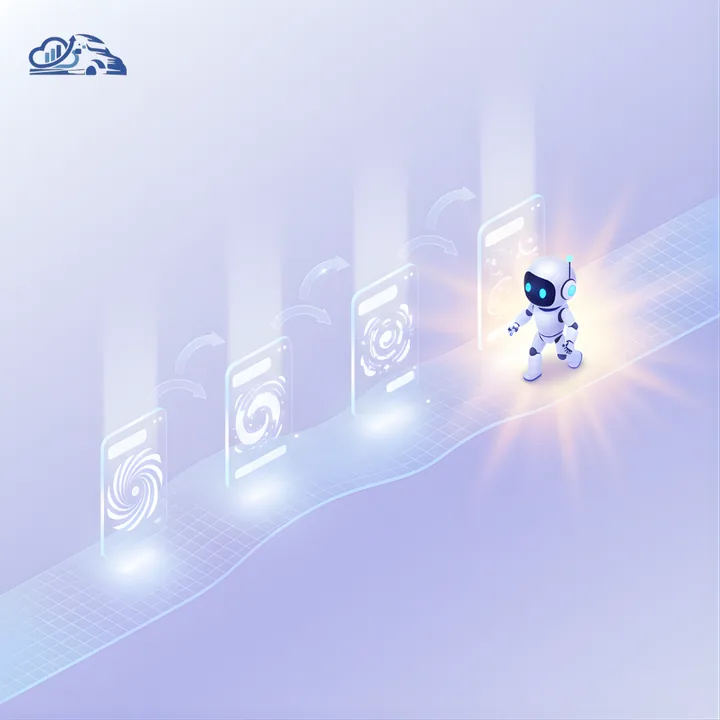
A four-stage delivery loop that keeps business context and technical execution in the same conversation, from the first workflow audit through post-launch monitoring.
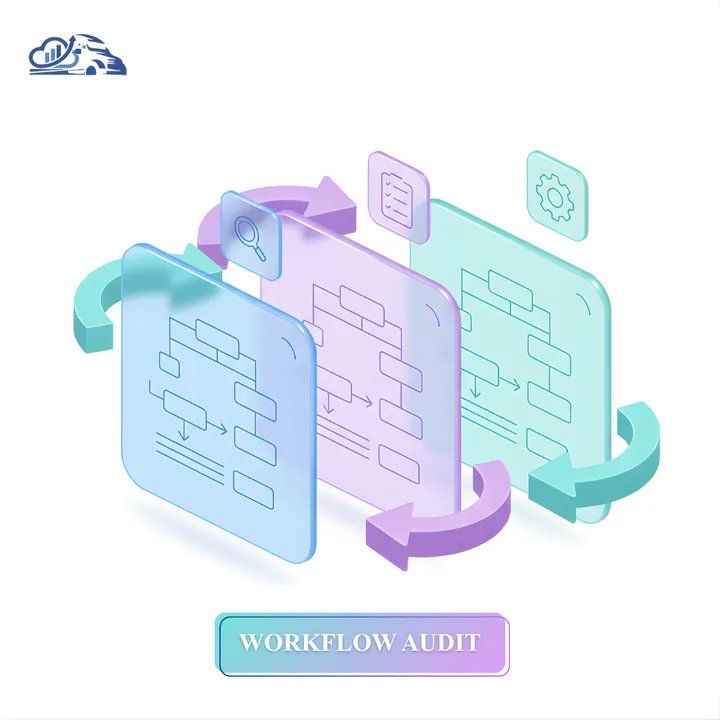
Every engagement begins here, before any framework is chosen. The audit maps the current workflow end-to-end and surfaces everything that shapes the architecture.
01
Process mapping: triggers, data sources, decision points, branching conditions
Human judgment boundary: which decisions require oversight vs. safe to automate

Output: a written scope document with architecture recommendation and delivery timeline
Stage 2
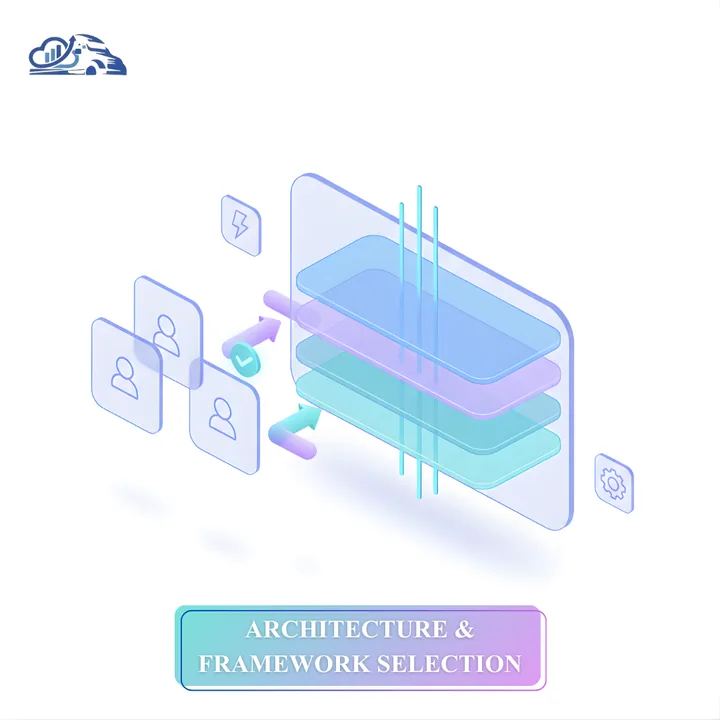
Architecture & Framework Selection
Framework selection is driven by workflow requirement, not vendor preference. The right choice depends on coordination complexity, auditability, and time-to-production.
02
LangGraph for complex branching workflows with stateful execution
CrewAI for role-based multi-agent coordination
OpenAI Agents SDK for velocity-first builds
Claude (Anthropic) at the model layer for reasoning-heavy tasks
Stage 3
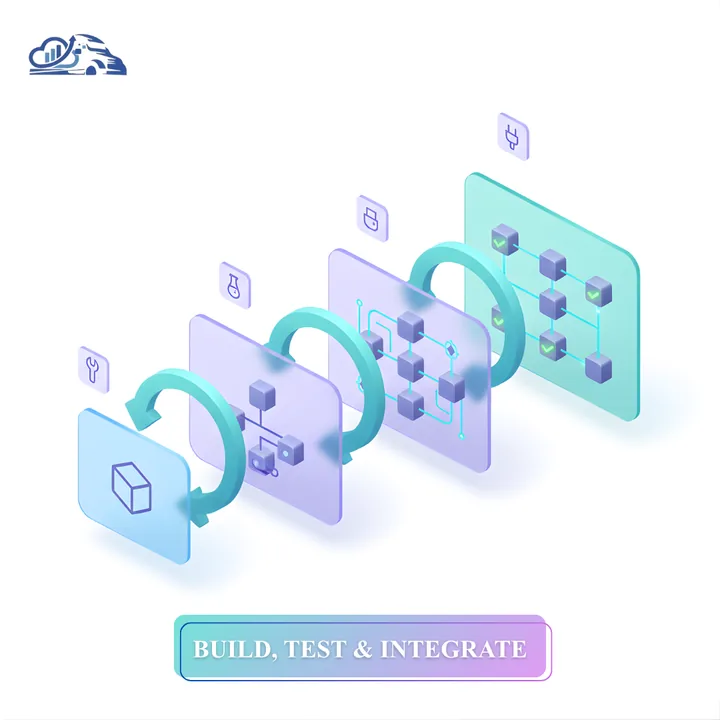
Build, Test, and Integrate
Implementation follows the architecture from Stage 2. Testing is not a phase at the end — it runs throughout the build against real workflow scenarios.
03
Coverage spans normal inputs, edge cases, adversarial inputs, failure modes
Token spend per step and latency per node tuned before production
Stage 4
Production Hardening & 30-Day Support
Deployment includes monitoring, alerting, structured logging, and full documentation. The 30-day post-launch window is part of the delivery, not a separate support contract.
04
Edge cases that only surface under real load are addressed in-engagement
Model update impacts are evaluated and handled as they occur
Performance tuned against real usage data, not projected assumptions
Same person from audit through post-launch — no handoff chain
The same person who ran the audit, designed the architecture, and wrote the implementation monitors production and resolves post-launch issues. No handoff chain. One loop, start to finish.
AI Agent vs. AI Assistant
Understanding the Difference Before You Build
Not every AI solution is an agent — and building the wrong one is an expensive way to find out.
Criterion
AI Assistant
AI Agent
Core behavior
Responds to a prompt
Executes a workflow autonomously
Scope
Single-turn or conversational
Multi-step, across tools and systems
Decision-making
Generates text based on input
Reasons, decides, and takes action
Tool use
Limited or none
Dynamic, context-driven, multi-tool
Memory
Session-level at best
Persistent across steps and sessions
Handles failure?
Returns an answer regardless
Routes failures to retry logic or human review
Integration depth
Minimal
Deep — CRMs, databases, APIs, pipelines
Cost model
Per prompt
Per workflow run, with token budget controls
Human oversight
Optional, post-hoc
Designed in — approval gates, escalation routing
Best for
Q&A, summarization, drafting
End-to-end process automation
Breaks when
Input falls outside training
Architecture doesn't match workflow complexity
AI Search Era Warning
80% of businesses are losing ground to competitors with better-built systems — without realising it.
Four warning signs that your current AI or data stack is holding you back:
AI agent prototype works — but can't scale to production
Website not appearing in AI Overviews or ChatGPT answers
Data pipelines breaking or delivering stale, unreliable data
Spending on freelancers but deliverables miss the mark
If you're experiencing any of the above — it's time to talk.
Real Work — Shipped
Companies That Have Scaled Smarter with Van Data Team
150+ AI Agent, Data Engineering, and automation projects delivered across 15+ countries — each shipped production-ready with measurable operational savings.
Multi-step business automation5.0
Flowise & n8n AI Agent Workflow
Client needed an AI agent workflow built with Flowise and n8n for automated multi-step task execution across integrated business tools. We designed the agent architecture, configured tool integrations, tested against real workflow scenarios, and delivered a production workflow.
Flowisen8nWebhooks
Verified client — Jason Y.
Unstructured document repository5.0
Large-Scale Data Extraction Agent
Client required an agent capable of extracting structured data from a large, varied document repository at scale — with inconsistent formatting, missing fields, and encoding variation. We built the extraction pipeline with document parsing, structured output validation, and delivery into the operational system.
PythonDocument ParsingStructured Outputs
Verified client — Chod S.
Schema design + full tool flow5.0
Multi-Phase AI Agent System
Engagement spanning multiple project phases covering granular data schema design, agent architecture, and full tool flow implementation. We designed the data schema, specified agent tool integrations, and delivered the complete system with documentation.
“Very knowledgeable and professional. Good communication.”
LangGraphPostgreSQLCustom Tools
Verified client — Gilad B.
Warehouse → API layer5.0
BigQuery Pipeline Automation + AI-Ready API
Client needed BigQuery pipeline automation connected to lightweight API endpoints for downstream AI consumption. We designed and shipped the pipeline with monitoring, alerting, and the API layer.
Multiple engagements covering LLM architecture review, agent design consultation, and implementation guidance for teams building AI systems in-house. Each consultation delivered a practical scope and architecture recommendation.
What clients say about our AI Agent development services
Van Data Team builds production-ready AI agents and agentic systems that automate real workflows, cut operational costs, and scale with your business.
TS
Tomer S.
@tomers
"Van exceeded all expectations with exceptional professionalism and expertise. The work landed ahead of schedule and the quality was consistently high."
Ahead of scheduleStrong communication
Project Manager
Enterprise client | Enterprise data pipeline architecture
FZ
Feng Z.
@fengz
"One of the best contractor experiences I have had on Upwork. The task was challenging and everything was delivered perfectly ahead of schedule."
Perfect deliveryHandles complexity
Technical Lead
Tech company | Financial data processing system
PT
Preska T.
@preskat
"Tran demonstrated a deep understanding of our requirements and made a meaningful difference in the final outcome from day one."
Strategic thinkingStrong requirements sense
Data Science Lead
Tech startup | Real-time analytics platform
NR
Nate R.
@nater
"Van is excellent to work with. Complex requirements never became blockers and communication stayed strong the entire time."
Great communicationComfortable with complex systems
Engineering Lead
Tech company | Healthcare data pipeline
KM
Kevin M.
@kevinm
"Van's expertise in data engineering is remarkable. He optimized our pipelines and saved us months of development time."
70% faster performanceRemarkable expertise
Data Manager
Academic institution | E-commerce analytics system
TK
Thomas K.
@thomask
"Excellent developer with strong Python and JavaScript skills. We will absolutely reach out again for future scraping work."
Python and JS depthGreat first engagement
Senior Developer
Denver tech startup | Complex web scraping script
TS
Tomer S.
@tomers
"Van exceeded all expectations with exceptional professionalism and expertise. The work landed ahead of schedule and the quality was consistently high."
Ahead of scheduleStrong communication
Project Manager
Enterprise client | Enterprise data pipeline architecture
FZ
Feng Z.
@fengz
"One of the best contractor experiences I have had on Upwork. The task was challenging and everything was delivered perfectly ahead of schedule."
Perfect deliveryHandles complexity
Technical Lead
Tech company | Financial data processing system
PT
Preska T.
@preskat
"Tran demonstrated a deep understanding of our requirements and made a meaningful difference in the final outcome from day one."
Strategic thinkingStrong requirements sense
Data Science Lead
Tech startup | Real-time analytics platform
NR
Nate R.
@nater
"Van is excellent to work with. Complex requirements never became blockers and communication stayed strong the entire time."
Great communicationComfortable with complex systems
Engineering Lead
Tech company | Healthcare data pipeline
KM
Kevin M.
@kevinm
"Van's expertise in data engineering is remarkable. He optimized our pipelines and saved us months of development time."
70% faster performanceRemarkable expertise
Data Manager
Academic institution | E-commerce analytics system
TK
Thomas K.
@thomask
"Excellent developer with strong Python and JavaScript skills. We will absolutely reach out again for future scraping work."
Python and JS depthGreat first engagement
Senior Developer
Denver tech startup | Complex web scraping script
The Van Data Team Difference
Why 150+ Businesses Partner With Us
Across 15+ countries, teams choose Van Data Team for production-grade delivery, not slideware. Here's what that looks like in practice.
01
Cross-Domain Mastery
Most agencies own one layer. We connect AI agent development, data pipeline engineering, and workflow automation under a single team so nothing gets lost between specialisms.
02
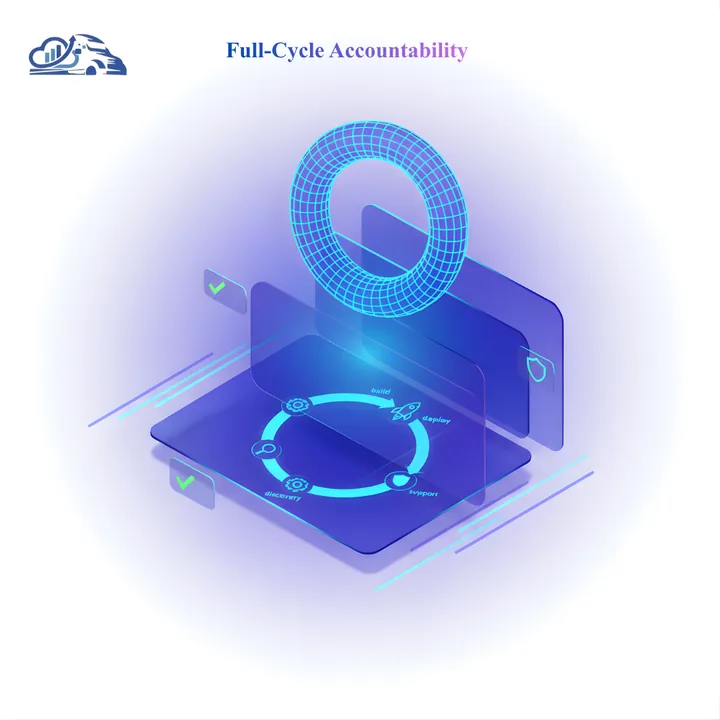
Full-Cycle Accountability
From the first workflow audit through stable production, one team owns the outcome at every stage. No handoffs, no finger-pointing. Four-stage delivery process and 5-star Upwork track record.
03
Production-Grade by Design
Reliability is not bolted on after launch. Every system ships with observability, safety guardrails, human-in-the-loop checkpoints, and latency optimization enforced from day one.
04
Flexible, Startup-Friendly Engagements
Clear scope before we start, delivery sprints from two to four weeks, and pricing that works for scaling businesses without locking you into rigid retainers.
05
Long-Term Partnership
We stay in the conversation after go-live, iterate based on real-world performance, and remain genuinely invested in how your business grows. Success is your outcome, not a closed ticket.
Tech Stack
Technology chosen for the operating constraint
Frameworks and infrastructure selected to match the workflow requirement, not a default toolkit.
Layer
Tools & Technologies
Agent Orchestration
LangGraphCrewAIOpenAI Agents SDK
Model Layer
Claude (Anthropic)OpenAI GPT-4o
Memory and State
PostgreSQLBigQueryRedisMemorySaver
Vector Retrieval
pgvectorChromaDBPinecone
Integration Layer
FastAPIREST APIsWebhooksKafkaAirflow
Data Infrastructure
BigQuerydbtAirflow
Deployment
AWSGCPDockerCloud Run
Observability
LangSmithStructured LoggingCost Dashboards
Scraping & Automation
PlaywrightSeleniumScrapy
Frequently Asked Questions
Questions teams usually ask before kickoff
These are the questions that usually shape scope, integration decisions, and rollout planning before the build starts.
Every week without a production-ready AI agent is a week your competitors pull further ahead.
Van Data Team's AI agent development services take you from workflow audit to stable production in two to four weeks, led by one founder from start to finish.