AI Agent Development Services: What Changes Between a Prototype and Production
A practical look at what separates a promising AI agent prototype from a production workflow your team can trust.
The jump from AI prototype to production rarely fails because the model is weak. It usually fails because the workflow around the model stays vague.
Teams often start with a promising proof of concept: a support assistant that drafts replies, an internal research assistant that gathers notes, or an operations bot that routes work between tools. The demo looks fast, but the production questions arrive immediately. Who approves what the system does? Which tools can it call? What happens when confidence is low? How do operators inspect the decision path after something goes wrong?
Those questions are what define real AI agent development services.
The prototype stage answers "can it work?"
At the prototype stage, the goal is usually simple. A team wants to see whether an agent can understand context, make a decision, and complete a few meaningful steps. That stage is useful because it proves the concept is worth taking seriously.
What it does not prove is whether the workflow can survive contact with real operating pressure.
Production environments introduce constraints that prototypes can ignore:
- customer-facing risk
- hidden dependencies between tools
- permissions and data boundaries
- latency and cost ceilings
- accountability when outputs need human review
Without those layers, an agent can look capable while still being unsafe to deploy.
Production work starts with the workflow contract
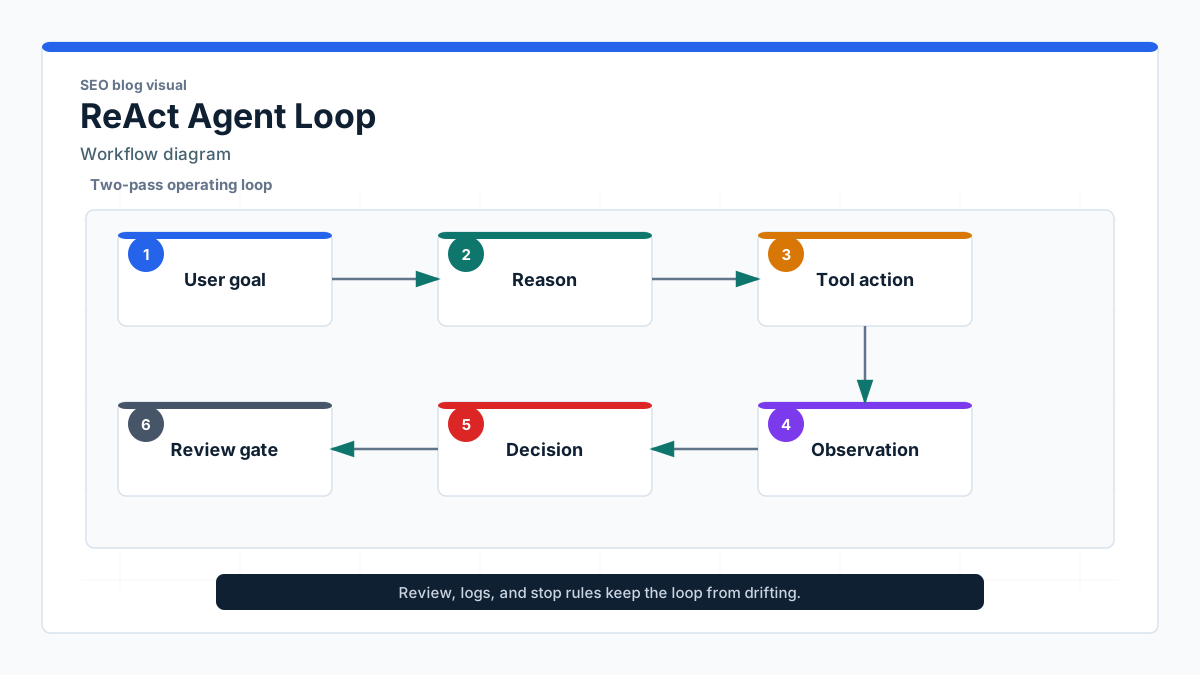
The fastest way to harden an AI agent is to stop treating it like a magic box and start treating it like an operational workflow.
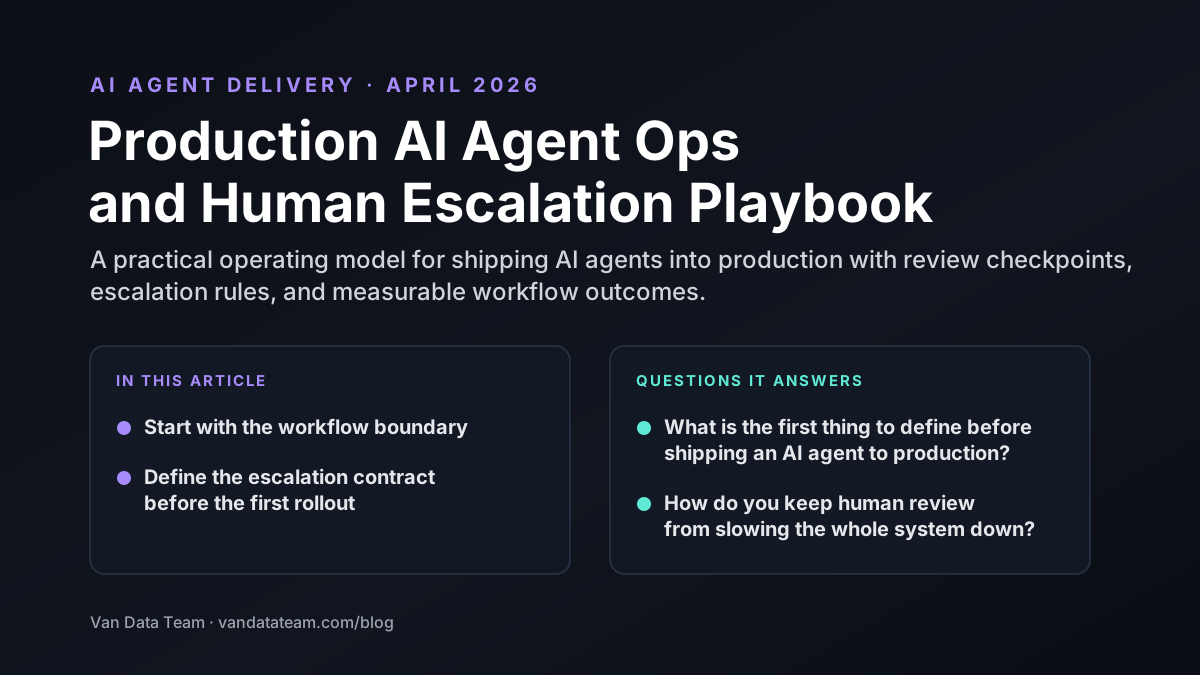
That means defining a clear contract:
- what the agent is allowed to do
- where it retrieves context
- when it should ask for human review
- which actions are reversible and which are not
- what counts as a successful outcome
This contract matters more than clever prompting. Good prompts help, but strong runtime boundaries are what make the system dependable after launch.
Tool access is where the real risk lives
Many teams focus on language quality first, but production risk usually appears when the agent moves from text generation into action.
The moment an agent can send a message, update a CRM record, trigger an API call, or change data in a workflow, the design needs stronger discipline. Tool permissions should be narrow, traceable, and mapped to the business impact of each action.
That is why a production build often includes:
- limited tool scopes instead of blanket access
- approval before sensitive actions
- clear logs for every tool call
- retry and fallback behavior when integrations fail
These controls make the agent more useful, not less. Operators trust systems they can inspect and recover.
Human review should sit where trust is earned
Human review is not a tax you apply after every step. It is a way to protect the moments where risk, uncertainty, and business impact are highest.
The strongest review pattern is usually one of these:
- approve before action for high-impact steps
- escalate on exception when the workflow leaves known rules
- sample outputs for quality in high-volume, lower-risk systems
This keeps human attention focused on signal instead of turning every workflow into slow-motion supervision.
Production readiness includes the week after launch
An AI agent is not done when it completes the first successful run. The real test is what happens after a week of live usage, when new edge cases appear and operators start depending on the workflow.
That is why production delivery should include:
- monitoring for drift and failure states
- quality review and tuning loops
- cost and latency visibility
- documentation for operators and reviewers
- a clear ownership path for post-launch changes
If nobody owns those layers, the system slowly becomes another brittle internal experiment.
The takeaway
AI agent development services should reduce ambiguity, not add more of it.
The most valuable partner is not the one who promises the most autonomous system on day one. It is the one who can map the workflow, define the operational contract, place review where it matters, and keep the system manageable after launch.
That is the point where a prototype stops being impressive theater and starts becoming useful infrastructure.

Founder of Van Data Team. Builds Vanaxity, the AI agent system for SEO, GEO, and AEO, and leads data engineering delivery for B2B teams.
About the authorArticle FAQ
Questions readers usually ask next.
These short answers clarify the practical follow-up questions that often come after the main article.
Need a similar system?
If this article maps to a workflow your team already operates, the next step is usually a scoped review of the system, constraints, and rollout path.
Consultation
Scope your next AI workflow.
Share the system and blockers. We will map fit, gaps, and the next step.