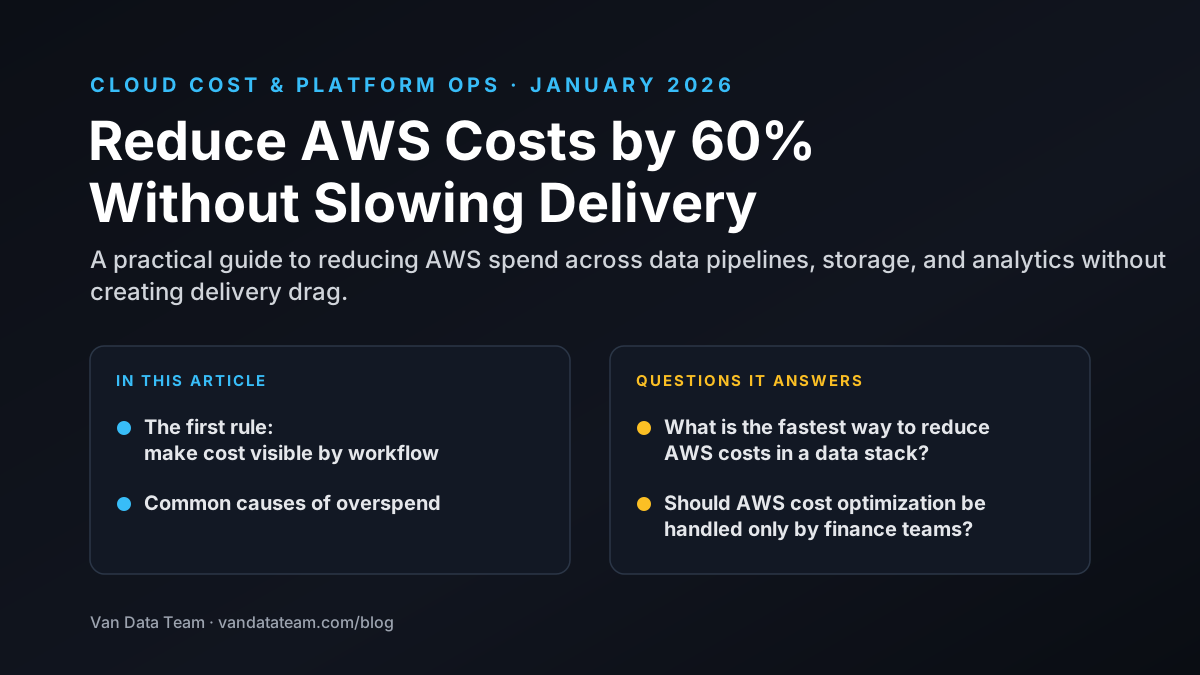
Cloud Cost Optimization for Data Platforms: The Guardrails That Actually Reduce Spend
Where cloud spend usually leaks in modern data platforms and which operating guardrails help teams reduce cost without cutting the wrong workloads.

Cloud cost optimization gets framed as a finance problem, but for data platforms it is usually an operating model problem.
The bill goes up because systems run with weak defaults for too long. Warehouses stay overprovisioned. Pipelines run too often. Clusters sit idle. Storage multiplies because no one owns retention rules. None of those issues feel dramatic day to day, but together they create expensive drift.
Start with business value, not only the invoice
The wrong way to reduce cloud spend is to cut broadly and hope nothing breaks.
The better path is to separate workloads into three groups:
- critical and time-sensitive
- important but flexible
- low-value or stale
This framing matters because not every compute job deserves the same urgency, cost profile, or freshness target.
The most common cost leaks
Modern data platforms usually leak in predictable places:
- scheduled jobs that run more often than needed
- transformation layers with unnecessary full refreshes
- dev and staging resources left on permanently
- storage growth with no lifecycle policy
- warehouse or cluster sizing that reflects old peak assumptions
Most of these are not architecture failures. They are ownership gaps.
Good guardrails make waste visible early
Teams usually see the bill after the waste has already compounded. Guardrails bring the signal forward.
Useful controls include:
- workload tagging by owner or business function
- cost alerts tied to services, not only the full account
- freshness tiers for data products
- retention and storage lifecycle rules
- scheduled reviews of top-cost pipelines or clusters
These do not only save money. They make the platform easier to reason about.
Optimization should be paired with operating questions
When spend rises, the investigation should include a few practical questions:
- which workloads grew and why
- did the business actually need that increase
- can orchestration frequency be adjusted
- are transformations using the right patterns
- is there a better boundary between batch and real-time processing
This is why cost optimization often overlaps with platform architecture, not only procurement.
The biggest mistake is confusing usage with waste
A healthy platform can be expensive if it is directly tied to growth, product value, or critical reporting. The goal is not to make the bill small at any cost. The goal is to make the bill intentional.
That usually means preserving the workloads that matter and cutting the ones that nobody would notice if they disappeared tomorrow.
The takeaway
Cloud cost optimization works best when it becomes part of platform operations instead of a once-a-quarter rescue project.
The biggest savings often come from making workload ownership clearer, freshness expectations more honest, and waste visible before it becomes part of the baseline. That is how teams reduce spend without weakening the systems the business actually depends on.

Founder of Van Data Team. Builds Vanaxity, the AI agent system for SEO, GEO, and AEO, and leads data engineering delivery for B2B teams.
About the authorArticle FAQ
Questions readers usually ask next.
These short answers clarify the practical follow-up questions that often come after the main article.
Need a similar system?
If this article maps to a workflow your team already operates, the next step is usually a scoped review of the system, constraints, and rollout path.
Consultation
Scope your next AI workflow.
Share the system and blockers. We will map fit, gaps, and the next step.