 Client projectLive
Cybersecurity and compliance · AI Agents
Yōjin AI Cybersecurity and Compliance Platform
Built by Van Data Team for Yōjin
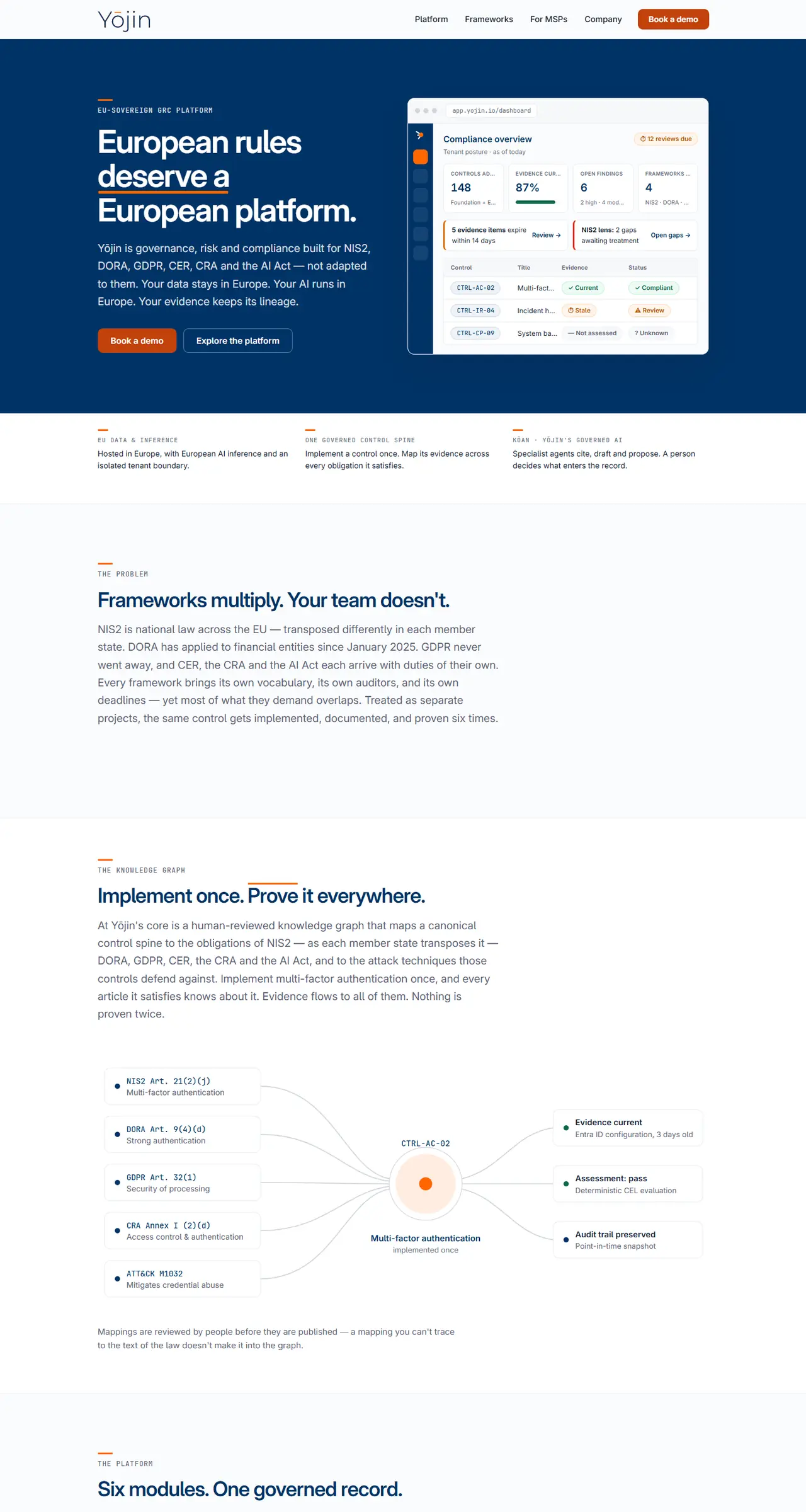
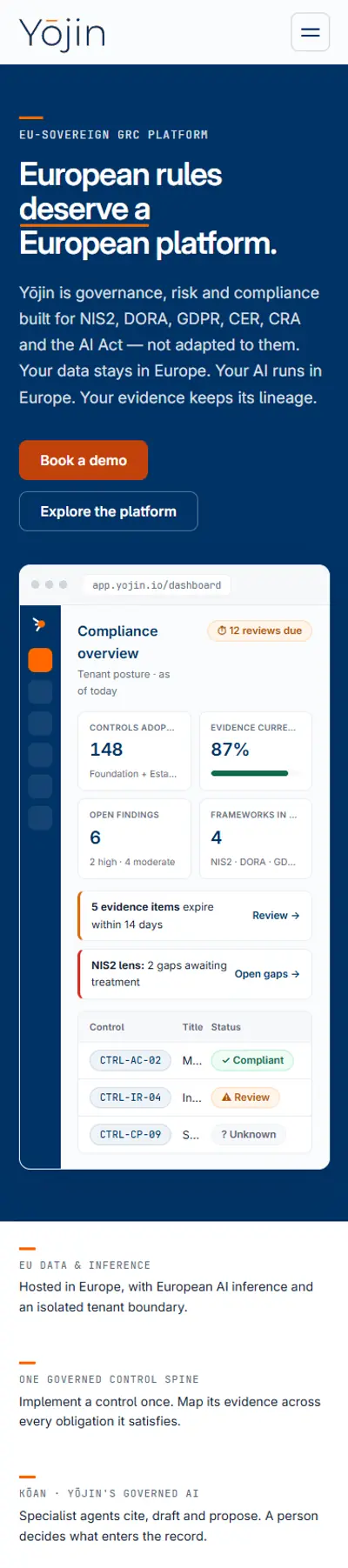
A governance, risk and compliance platform built on a Mistral 7B model fine-tuned on 424k samples, with retrieval over a Neo4j threat-and-compliance knowledge graph, that turns each organisation's gaps into a prioritised action plan.
- fine-tuning samples, plus 106k for validation
- 424k
- EU frameworks covered, per yojin.io
- 6
Measured outcomes
Outcome 01
Mistral 7B fine-tuned on 424k samples, with 106k held out for validation
Outcome 02
Neo4j threat-and-compliance knowledge graph with ChromaDB retrieval
Outcome 03
Live platform covering NIS2, DORA, GDPR, CER, CRA and the AI Act
Challenge pressure
Organisations and the managed service providers behind them have to meet NIS2, DORA, GDPR and the AI Act, but generic checklists ignore their size, budget and supply chain, and general language models do not know the frameworks well enough to advise on them.
The situation
Yōjin takes organisations from compliance to cyber resilience. It finds security gaps across a business and its third parties, assesses exposure against a threat-and-compliance knowledge base, and puts context-aware actions into daily workflows, matched to each organisation's size, budget, risk profile and regulatory duties. It serves enterprises and managed service providers, and today presents itself as an EU-sovereign GRC platform.
What we built
Mistral 7B was fine-tuned on 424k training samples with 106k held out for validation, in runs of about four hours. A Neo4j graph models threats, controls and compliance obligations, and ChromaDB backs retrieval over the knowledge base. LangGraph orchestrates each query across the fine-tuned model, the graph and the vector store, with OpenAI models alongside, on AWS.
What changed
Recommendations come from a model trained on security and compliance material and grounded in the organisation's own graph of controls and obligations, rather than from a general model or a static checklist.
Constraints and decisions
A fine-tuned 7B model instead of a large general one: a smaller model trained on the domain can be served where the customer's data has to stay, which a platform promising that its AI runs in Europe depends on. The graph keeps controls and obligations as explicit relationships, so every recommendation can name the obligation it serves.
Technology stack
 OpenAI
 AWS
Need a similar system?
If this case study maps to your current workflow, the next useful step is a scoped project conversation with constraints, timeline, and integration needs.
Related case studies
More work like this
 Client projectLive
Small business operations
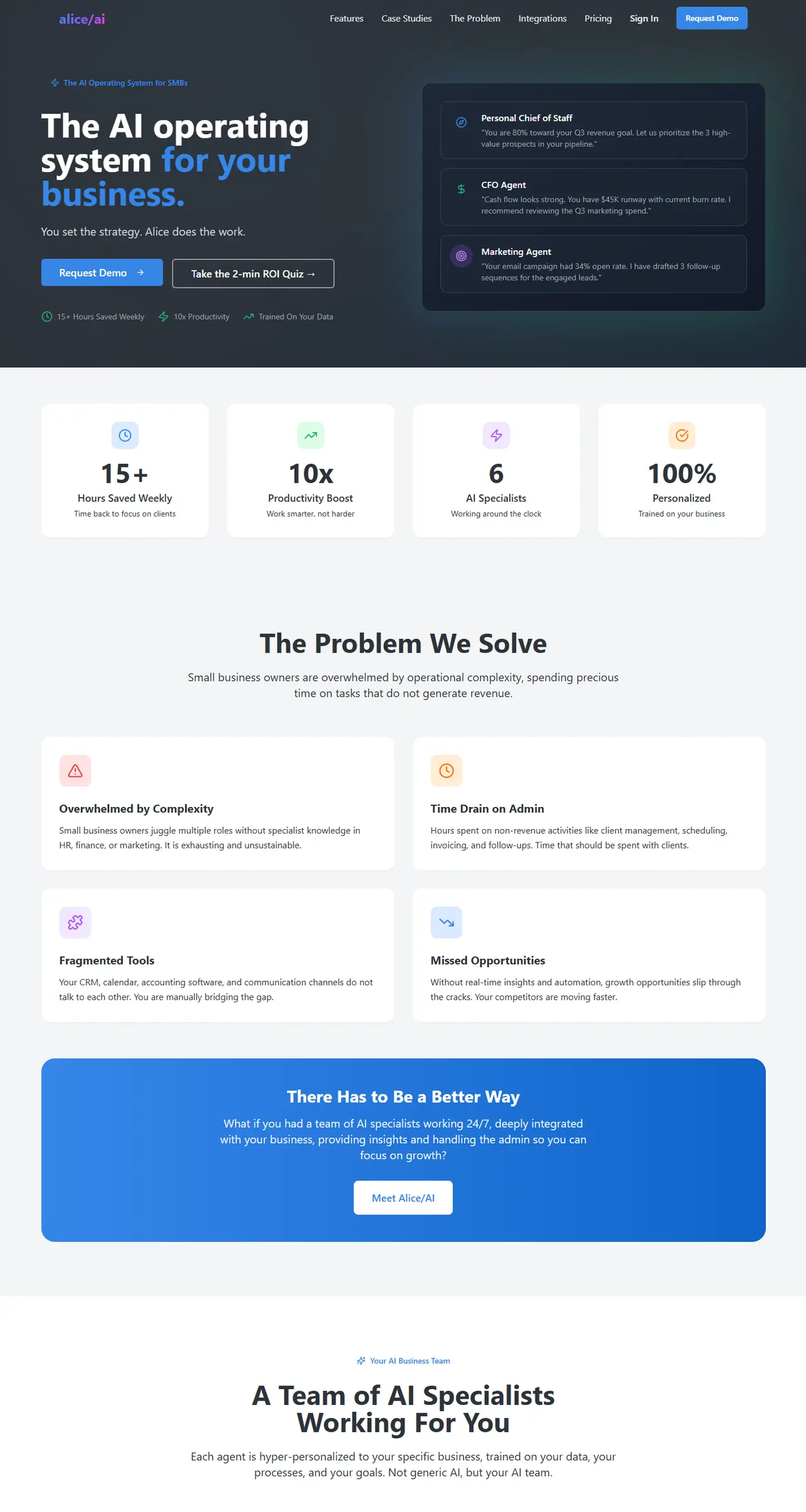
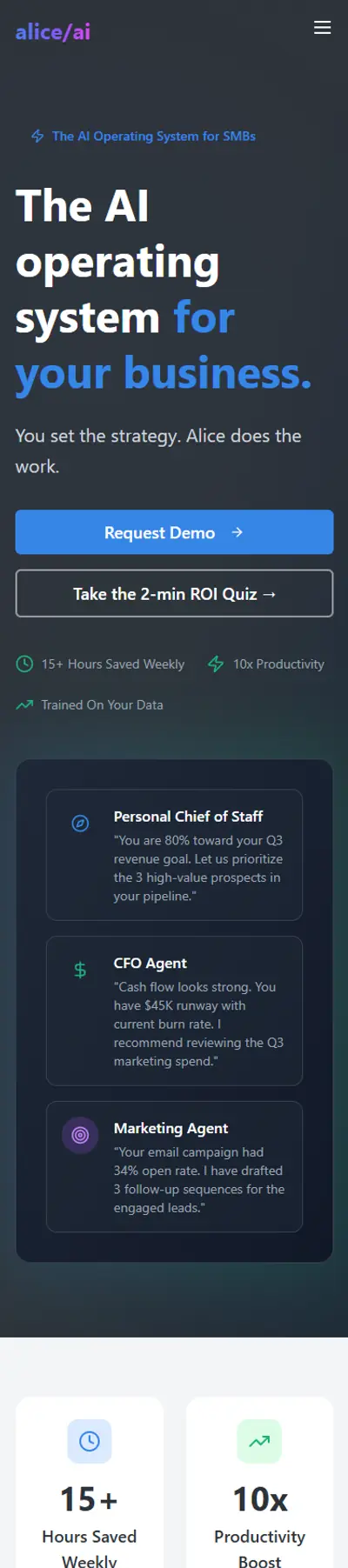
A supervisor agent that runs 70+ business tools for small-business owners
70+
MCP tool integrations under one supervisor

 Client projectLive
Education
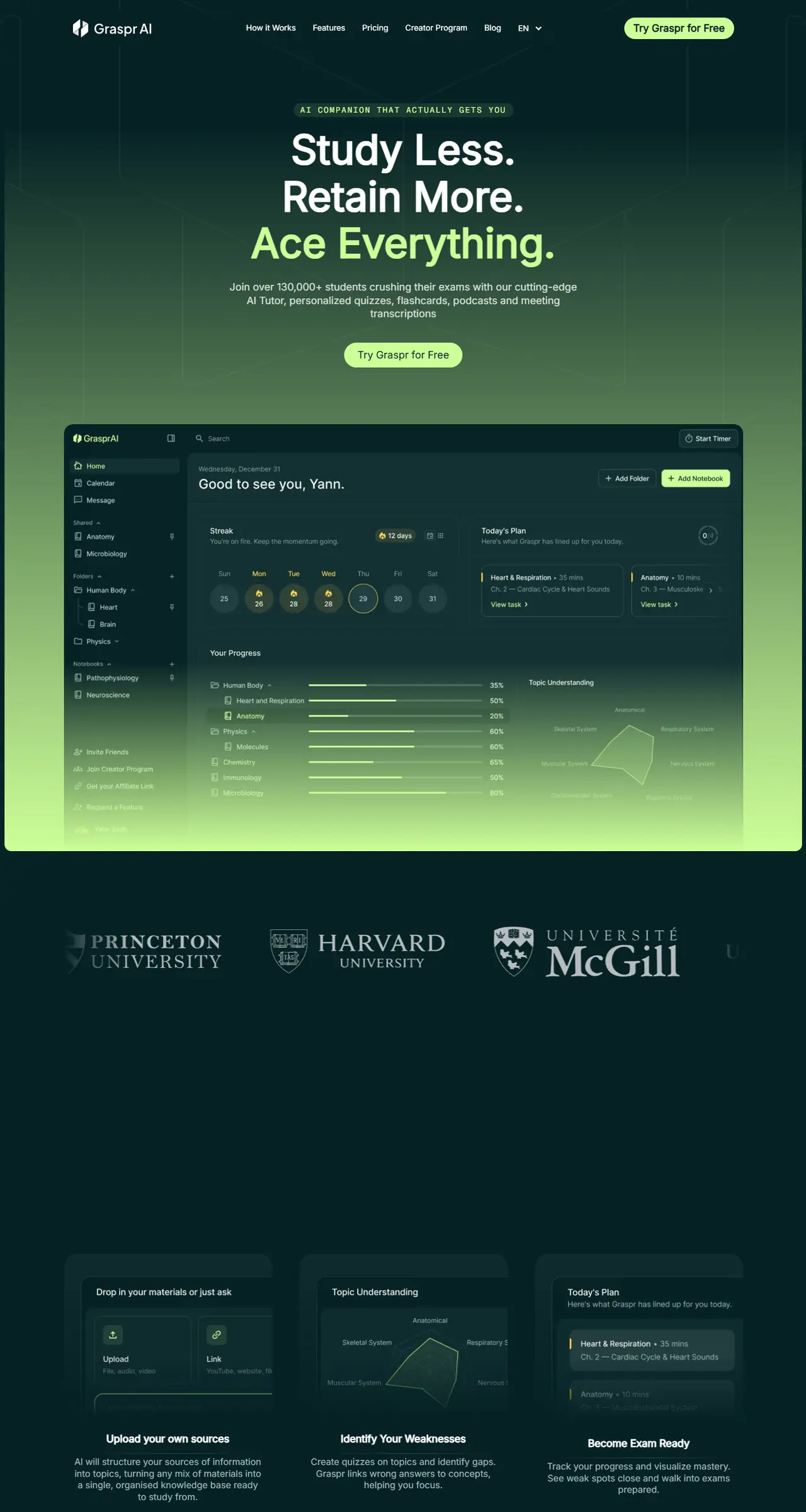
RAG tutoring that lifted answer accuracy from about 80% to 95%+
95%+
RAG answer accuracy, from about 80%