Conversational AI platform evaluation beyond Gartner
Conversational AI platform evaluation uses Gartner as a shortlist signal, then tests fit, governance, voice, cost, handoff, compliance, and production risk.
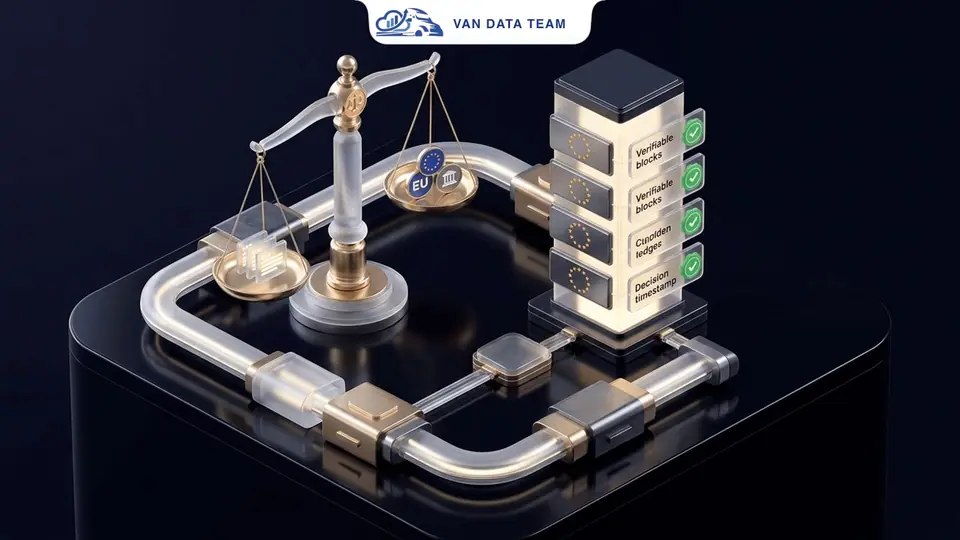
A Gartner Leader placement is a useful shortlist signal, not a buying decision. A sound conversational AI platform evaluation still has to prove fit against your workflows, data, compliance duties, voice path, integrations, cost model, and human-control requirements. For engineering and CX leaders, the practical question is not who sits where on a chart. It is what happens when an agent meets your customers, permissions, and failure modes.
The vendor post supplies the relevant figures: Google Cloud published the announcement on July 17, 2026; both underlying reports are dated July 7, 2026; Google was named a Leader for the second consecutive year; and its #1 ranking in three of four use cases belongs to Critical Capabilities. CX Foundation's independent coverage identifies four Leaders: Google, Salesforce, SoundHound AI, and Kore.ai.
The Google Cloud announcement states:
"For the second consecutive year, Google has been named a Leader in the Gartner Magic Quadrant for Conversational AI Platforms."
At Van Data Team, we start by turning that market signal into an operating workflow: a use-case map, frozen rubric, comparable pilot, and production gates. Teams with an active shortlist can use our founder-led delivery model to keep selection and implementation in the same accountability loop.
Key Takeaways
- The Magic Quadrant evaluates market position through Completeness of Vision and Ability to Execute; Critical Capabilities is a separate, use-case-oriented assessment.
- Google is not the sole Leader, and its reported use-case rankings belong to Critical Capabilities, not the Magic Quadrant.
- No candidate should advance on analyst placement alone. Every vendor must clear the same security, compliance, integration, handoff, cost, and operability gates.
- Production approval requires grounded answers, least-privilege tools, audit trails, monitoring, human escalation, pause controls, rollback, and retained ownership.
Read the Magic Quadrant and Critical Capabilities separately
The Magic Quadrant and Critical Capabilities answer different questions, and neither replaces buyer-run validation.
| Evidence source | What it measures | Best buyer use | What it cannot decide |
|---|---|---|---|
| Magic Quadrant | Market position against Completeness of Vision and Ability to Execute under Gartner's methodology | Market scan and shortlist hypotheses | Fit for your data, workflow, risk, or budget |
| Critical Capabilities | Product scores for defined use cases | Use-case hypotheses and deeper questions | Performance on your corpus, integrations, and traffic |
| Buyer-run assessment | Behavior against your frozen rubric and approved test set | Selection, production gate, and residual-risk decision | Future product changes or every possible incident |
Google's Leader placement belongs to the Magic Quadrant. Its Critical Capabilities result is separate. Google's post also says it received the furthest positioning on the Vision axis and the highest positioning on the Execution axis. That is the vendor's description of Gartner's placement, not proof that Google won the category or fits every buyer.
The same post centers Gemini Enterprise for Customer Experience and CX Agent Studio, with supporting references to AI Hypercomputer and Agentic Data Cloud. Those details help evaluators form product hypotheses about knowledge access, voice, actions, security, and scale. They do not remove the need to test the actual workflow.
The broader market is moving from scripted chat toward agents that interpret intent, retrieve enterprise knowledge, and act across systems, as CX Today's market rundown explains. That shift increases the blast radius. A wrong answer is a failure mode; an unauthorized or duplicated action is another.
Gartner's Magic Quadrant methodology is explicit that the research is not an endorsement or an instruction to buy only the highest-rated vendor. Use Leader status to justify deeper diligence. Do not let it waive a gate. A non-Leader may also fit a specialized workflow better, so the shortlist should reflect requirements rather than quadrant membership alone.
What Leader status can tell you
A Leader placement tells you that Gartner assessed the provider as strong on market vision and execution within the defined market and methodology. It also tells you the vendor cleared the report's inclusion process. That is useful evidence for market scanning and procurement discussions.
What Leader status cannot tell you
A Leader placement cannot establish:
- Whether the platform handles your highest-risk customer journey
- Whether data residency, retention, and deletion satisfy your obligations
- Whether role, tenant, tool, and data-domain permissions work as designed
- Whether the full voice path meets your latency and handoff expectations
- Whether integrations fail safely under denied access, timeouts, and duplicate requests
- Whether you can reconstruct, override, pause, export, and exit the system
- Whether total workload cost fits the budget after review and operations
The decision rule is simple: no platform advances because of quadrant placement alone, and a strong average score never cancels a failed non-negotiable.
Build your conversational AI platform evaluation before demos
A reliable evaluation rubric is agreed and frozen before vendors demonstrate their preferred scenarios. Otherwise, the best presentation starts defining the requirement after the fact.
At Van Data Team, we start by mapping the existing intake, decisions, tools, data, and handoffs. The mistake we see is scoring the agent before defining what it may do, when it must stop, and who owns recovery.
For each proposed use case, record:
- The user outcome and business owner
- The approved data sources and residency constraints
- The systems and tools the agent may call
- The actions allowed without review
- The actions requiring human approval
- The failure severity, fallback, and rollback path
- The handoff destination and context the person must receive
Then convert that map into a pass, conditional-pass, or fail scorecard. Keep disqualifiers separate from weighted preferences.
| Dimension | Buyer question | Required evidence |
|---|---|---|
| Use-case fit | Can the agent complete the intended workflow without crossing its action boundary? | Results from the buyer's scenario set, including exceptions |
| Data and compliance | Where is data processed, stored, retained, and deleted? | Architecture, contractual terms, control mapping, and a deletion test |
| Grounding | Can claims be traced to approved, current knowledge? | Citations, retrieval traces, stale-data tests, and unsupported-answer behavior |
| Voice | Does the complete voice path meet the buyer's experience requirement? | Tests across representative networks, telephony routes, interruptions, and transfers |
| Integrations and actions | Can required systems be called safely? | Permission tests, action logs, idempotency behavior, error handling, and rollback |
| Human handoff | Does escalation happen with the right timing and context? | Handoff transcripts, routing evidence, queue behavior, and fallback tests |
| Security and observability | Can access be constrained and incidents reconstructed? | Identity configuration, traces, audit records, alerts, and incident artifacts |
| Cost and operability | Can the buyer forecast, deploy, change, pause, recover, and support the workload? | Pilot telemetry, cost model, runbook, ownership map, and rollback exercise |
| Portability | Can knowledge, configurations, data, and logs be exported? | Contract terms and a practical export test |
Engineering, CX, security, compliance, operations, and procurement should agree on the evidence each row requires. Vendors may explain how their platforms produce that evidence, but they should not rewrite the rubric.
Pilot platforms on your data and traffic
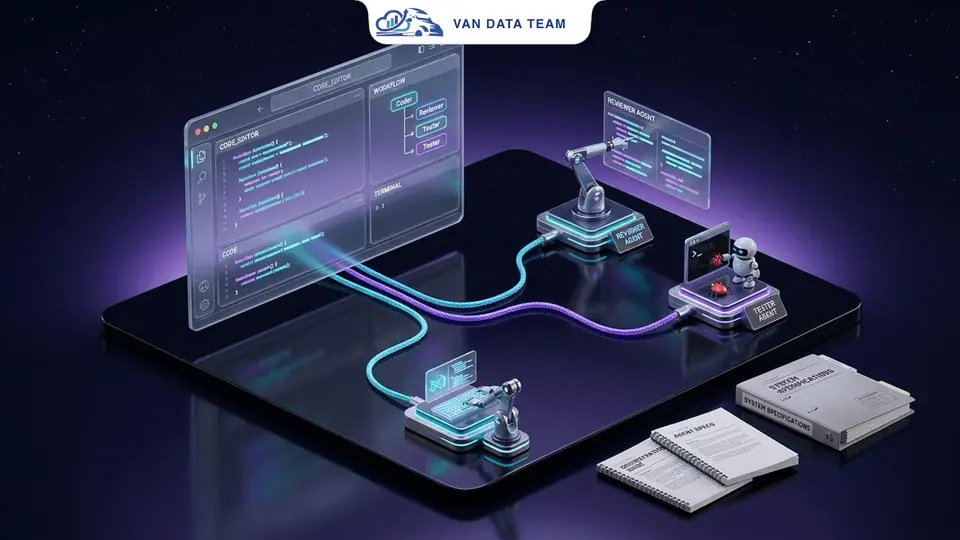
A credible pilot runs the same representative scenarios across candidates and stores enough evidence for reviewers to reproduce the result. A curated demonstration is useful for orientation, but it is not a production test.
Build the corpus from approved buyer data. Include routine, ambiguous, incomplete, conflicting, stale, and adversarial requests. Keep the knowledge snapshot, prompt policy, tool interfaces, identity assumptions, and review rules comparable across vendors.
Capture more than the final answer:
- Retrieved sources and citations
- Tool requests, arguments, permissions, and side effects
- Handoff timing and transferred context
- Unsupported answers and silent failures
- End-to-end latency by workflow stage
- Platform fees, model and token usage, voice, integration, review, and operations cost
- Traces, configuration versions, and reviewer decisions
Then inject failure. Remove required knowledge, return conflicting policy, deny a tool permission, interrupt a conversation, make a downstream system unavailable, and replay a request that could create a duplicate action. The platform should fail inside a known boundary, not improvise around it.
Hypothetical voice support scenario
A caller has an account issue that needs authentication, knowledge retrieval, and a downstream action. The pilot should test interruption handling, sensitive-data rules, unavailable knowledge, denied access, tool failure, and transfer to a person with the conversation context intact.
Do not copy a universal voice benchmark into the acceptance criteria. Set the latency budget from the buyer's geography, network, telephony path, turn-taking design, and customer expectation. Measure the full path, not a model response in isolation.
Hypothetical digital service scenario
A customer requests a policy-dependent account change. The agent must retrieve the current policy, show its source, stop when requirements are incomplete, request approval where needed, and leave an auditable record. A fluent answer without a safe action boundary is a failed test.
Analyst research can lag a fast-moving product. Record model, platform, prompt, connector, and knowledge versions so the decision remains tied to tested behavior, not a product name that later changes.
Make AI agent governance part of the runtime
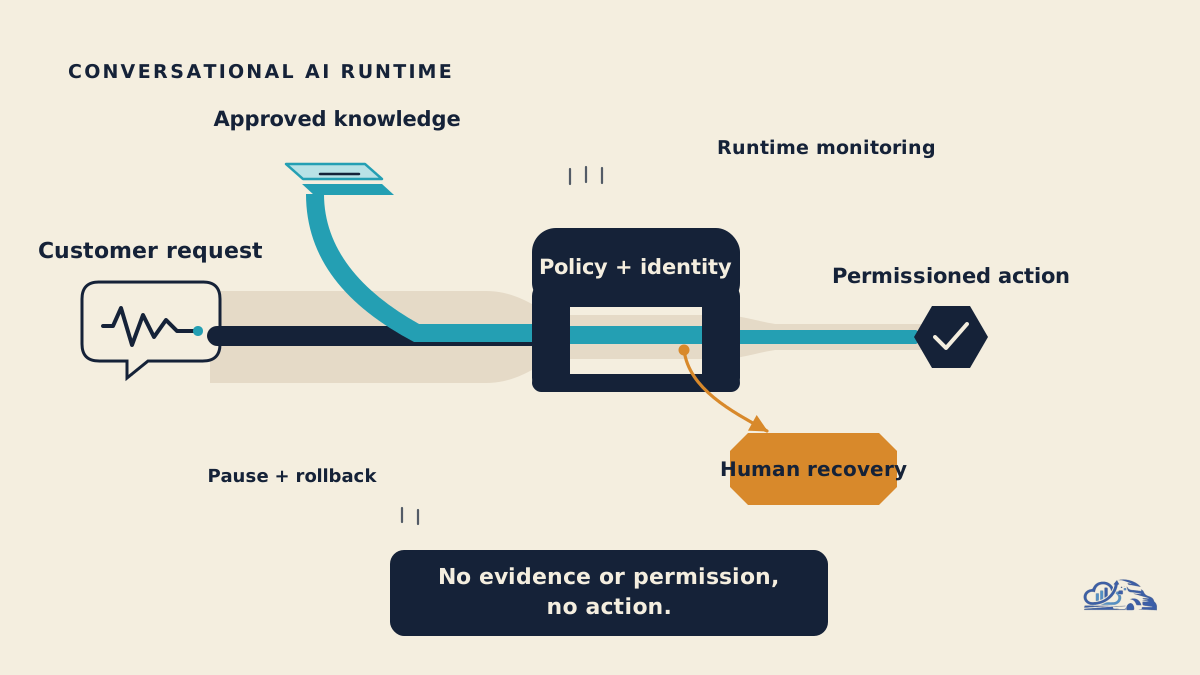
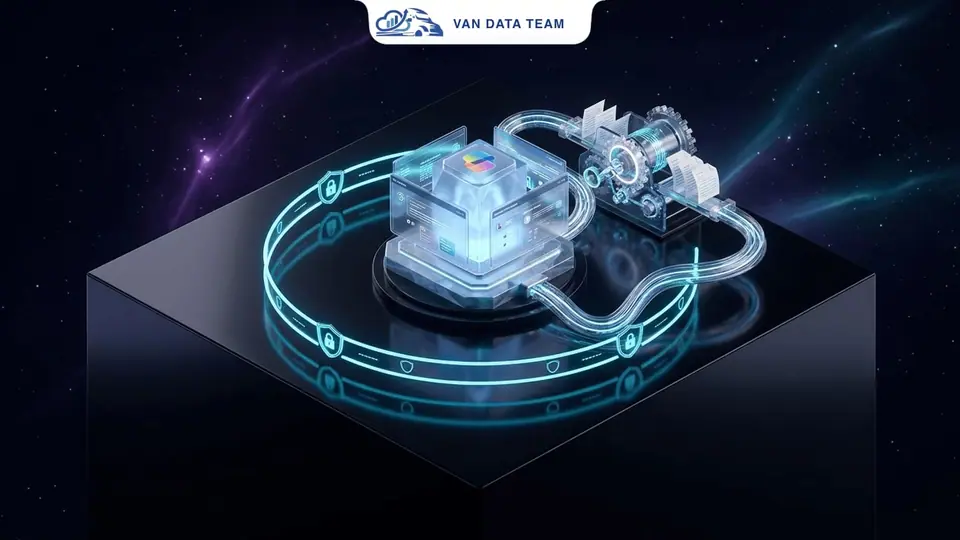
AI agent governance must be implemented and tested as runtime architecture, not filed as procurement paperwork. The control path should be visible from customer input to knowledge retrieval, permitted action, observation, escalation, and recovery.
Google's announcement itself says hallucinations create real business risk and stresses enterprise security, governance, operational controls, and retained ownership. That is the right operating frame even when evaluating a different vendor: autonomy stays bounded by policy, identity, evidence, and human control.
A production control loop should include:
- Grounding controls: Retrieve only from approved sources, expose citations, detect stale content, and refuse unsupported claims
- Policy guardrails: Apply channel, customer, jurisdiction, and action rules before a response or tool call
- Least-privilege tools: Scope access by identity, tenant, data domain, action, and environment
- Runtime observation: Log prompts, retrieval, decisions, tool calls, outputs, latency, cost, and policy outcomes
- Human escalation: Route uncertainty, high-impact actions, and exceptions with full context and clear ownership
- Recovery controls: Provide safe fallback, pause, retry, compensation, and rollback behavior
- Change control: Review model, prompt, tool, policy, and knowledge changes before they alter production behavior
- Ownership controls: Retain access to data, configurations, logs, evaluation artifacts, and operating decisions
Human review should sit where business risk is high or evidence is weak. Requiring approval after every action creates queue pressure and trains operators to approve mechanically. Removing review entirely turns model confidence into business authority.
For teams that need to make this operational, Van Data Team's agent guardrails and escalation work can produce a scoped workflow review, action-boundary map, pilot plan, governance gates, observability requirements, and implementation scope. The output is a decision packet the buyer can inspect, not a generic platform recommendation.
Select on evidence and preserve the exit path
The final selection should favor the platform with the strongest evidence against the buyer's operating requirements, even when another candidate has a stronger market narrative. A clean decision packet makes that reasoning reviewable later.
The packet should contain:
- The approved use-case and action-boundary map
- The frozen rubric and disqualifying conditions
- The test corpus, configurations, and pilot evidence
- The security, compliance, and data-control review
- The workload-based cost model
- The residual-risk and human-oversight design
- The rollout, monitoring, rollback, and incident plan
- The export test and exit plan
- The architecture decision record and reevaluation triggers
Model cost is only part of total cost. Include platform fees, speech and telephony, retrieval and data processing, connectors, human review, monitoring, incident support, and change management. Use pilot telemetry and workload assumptions that finance and engineering can both inspect.
Preserve ownership through contractual terms and practical tests. Confirm that the buyer can export knowledge assets, configurations, transcripts, traces, audit logs, and evaluation results in usable form. Test the exit path before lock-in makes the exercise politically difficult.
Common failure modes are predictable: analyst labels substitute for requirements, demos substitute for pilots, weighted totals hide failed gates, autonomy expands faster than permissions, and teams discover missing logs during an incident. Each is prevented by an artifact and a named owner.
The takeaway: turn the signal into operating evidence
The right conclusion from Google's placement is that the vendor merits serious evaluation, not automatic selection. The Magic Quadrant supplies a market signal, while Critical Capabilities adds use-case evidence. Neither carries your compliance duty, answers your pager, or owns a failed customer action.
A defensible conversational AI platform evaluation follows a clear path: market signal -> shortlist -> frozen scorecard -> governed pilot -> production gate -> monitored rollout. The selected platform must prove fit on your data, within your permissions, under your failure modes, and against a cost model your operators can explain.
If you want that evidence assembled before procurement commits, Van Data Team's production AI agent delivery can scope the workflow, evaluation plan, governance controls, rollout gates, and recovery design. The goal is not to find a logo that removes accountability. It is to choose a platform your team can control in production.

Founder of Van Data Team. Builds Vanaxity, the AI agent system for SEO, GEO, and AEO, and leads data engineering delivery for B2B teams.
About the authorArticle FAQ
Questions readers usually ask next.
These short answers clarify the practical follow-up questions that often come after the main article.
Need a similar system?
If this article maps to a workflow your team already operates, the next step is usually a scoped review of the system, constraints, and rollout path.
Free evaluation session
Pressure-Test Your Conversational AI Shortlist
Review your conversational AI platform evaluation in a free, no-obligation session and leave with a fit-based shortlist, test plan, and production governance priorities.
- A shortlist rubric separating Gartner market signals from your use-case and risk requirements
- A comparable pilot plan using your data, traffic, voice latency targets, integrations, and failure cases
- Security and governance gates for access control, grounding, monitoring, human handoff, and escalation
- A decision path with evidence gaps, owners, and concrete next steps
Consultation
Scope your next AI workflow.
Share the system and blockers. We will map fit, gaps, and the next step.