July 2, 2026
AI Agent Development Cost in 2026: What You Actually Pay and Why
What AI agent development costs in 2026: real pricing tiers from $500 audits to $80K multi agent systems, what drives quotes up, and how to budget.
Article focus
Most AI agent pricing pages hide the number until you book a call. Here is our actual pricing, the factors that move a quote, and the costs that show up after launch.
Section guide
Most conversations about AI agent development cost start with a demo and end with "book a call for pricing." Here is the direct version: at Van Data Team, engagements start at $500 for a fixed price strategy sprint, typical scoped production builds start around $2,500, and complex governed multi agent systems run $25K to $80K. US agencies commonly quote several times those figures for equivalent scope, and an in-house hire costs more than both before the first agent ships.
This guide breaks down where those numbers come from, what moves a quote up or down, and the ongoing costs most proposals leave out.
How much does AI agent development cost in 2026?
Pricing only makes sense next to the deliverable. These are the tiers we quote against, using our published pricing:
- Strategy sprint - $500 fixed. Workflow audit, architecture direction, quick win backlog, and a delivery estimate. The cheapest way to turn "we should use agents" into a scoped plan.
- Scoped production build - from $2,500. One production agent: workflow design, integrations, guardrails, testing, deployment, and a 30 day support window.
- Multi agent production system - $25K to $80K. A governed multi agent stack, for example an agentic BI reporting system: semantic layer, validation agents, evaluation suites, and delivery surfaces.
- Embedded partner - $50/hr ongoing. Senior support inside an existing AI or data roadmap.
Every build receives a fixed quote after a free workflow audit, so the price is locked before implementation starts.
Two things make these numbers lower than most of the quotes you will collect. First, delivery is founder led from Ho Chi Minh City, Vietnam, which keeps overhead lean without outsourcing the actual engineering. Second, scope is fixed before code is written, which removes the padding agencies add for requirement drift.
Key takeaway: the honest unit of pricing is the workflow, not the agent. A vendor who quotes before understanding your workflow is guessing, in either direction.
What actually drives an AI agent quote up or down?
Five factors explain almost every price difference between two agent proposals:
- Workflow complexity. A single agent that classifies and routes support tickets is a different build from a multi step workflow with branching decisions, retries, and human approval gates.
- Integration surface. Each system the agent touches - CRM, warehouse, internal APIs, communication tools - adds design, testing, and failure handling work. Integrations are usually the largest cost driver after the workflow itself.
- Autonomy and risk level. Agents that act (send messages, update records, trigger payments) need guardrails, audit trails, and human in the loop checkpoints that read-only agents do not. Safety is engineering time.
- Observability and evaluation depth. Production agents need execution tracing, cost instrumentation, and evaluation suites. In LangChain's State of Agent Engineering survey (2025), only 62% of teams running agents have detailed per step tracing - the missing 38% is where budgets quietly die in debugging.
- Token and latency budgets. Model spend is a real operating cost. Designing an agent to run within a token budget per execution is cheaper to do during architecture than to retrofit after the first surprising invoice.
Agency vs in-house vs DIY: the real cost comparison
- Specialist boutique (us): $2,500–$80K per project, fixed quotes, 2–4 weeks per build. The hidden cost is vendor selection risk, so check verifiable reviews before committing.
- US agency: commonly several times boutique pricing for equivalent scope, 4–12 weeks. The hidden cost is the discovery phases and account management layers you also pay for.
- In-house hire: roughly $162,750 average base salary for a US machine learning engineer (Glassdoor), plus benefits and equity, with a 3–6 month hiring cycle before work starts. The hidden cost: one person rarely covers agents, data, and infrastructure at once.
- DIY and no-code tools: $50–$500 per month in tooling, days to a demo. The hidden cost is that demos rarely survive production traffic, edge cases, or audits, and the rebuild lands back on this list.
The in-house comparison deserves nuance: hiring is often the right long term move once agent workloads are proven. The expensive mistake is making a $200K+ annual commitment to explore a problem a $500 strategy sprint would have scoped.
Key takeaway: for a first production agent, buy the build and keep the hire decision for when you know what you are staffing for.
Why cheap agent builds get expensive later
The most common cost failure in agent projects is not the initial quote - it is paying twice. A prototype built without production discipline gets rebuilt when it meets real traffic.
The pattern is well documented outside AI too: McKinsey and Oxford research across 5,400 large IT projects found they run 45% over budget and deliver 56% less value than predicted, largely because key decisions are deferred. In agent projects, the deferred decisions are always the same ones: state management, failure boundaries, human review points, and cost controls.
That is why our builds front load those decisions into the audit and architecture steps, and why the market keeps growing anyway - MarketsandMarkets projects the AI agents market to reach $52.62B by 2030, a 46.3% compound annual growth rate. The money follows the workflows; the waste follows the shortcuts.
Free workflow review
Clarify the next build step.
Share the workflow and blockers. Leave with a clearer scope, fit, and next move.
- Spot the fragile step.
- See where AI or automation fits.
- Leave with a clear next step.
How to budget for an AI agent project
A budgeting checklist that keeps proposals comparable:
- Fix the workflow first. Write down the trigger, the steps, the systems touched, and the decision a human currently makes. Every vendor should quote against the same document.
- Separate build cost from run cost. Ask for the expected token spend per execution and the monthly infrastructure estimate, not just the build price.
- Demand a fixed quote after scoping. Hourly discovery against an undefined workflow is where budgets disappear.
- Include the support window. A 30 day post launch window (included in our builds) is where edge cases surface. If support is a separate contract, price it in.
- Start with the sprint, not the system. $500 to validate the workflow and get an architecture direction is the cheapest risk reduction available in this market.
Where Van Data Team fits
We build production AI agents with LangGraph, CrewAI, and Python - 150+ projects delivered, a 5.0 rating across 71 public Upwork reviews, and a two to four week window from audit to stable production for scoped builds. Pricing is published, quotes are fixed, and the workflow audit that produces your quote is free.
If you want a number for your specific workflow, book a free 30 minute consultation or start with the $500 strategy sprint. You will leave with a scope document and a fixed price, whether or not you build with us.
Article FAQ
Questions readers usually ask next.
These short answers clarify the practical follow-up questions that often come after the main article.
Need a similar system?
If this article maps to a workflow your team already operates, the next step is usually a scoped review of the system, constraints, and rollout path.
Book your free workflow review here.
Related articles
View all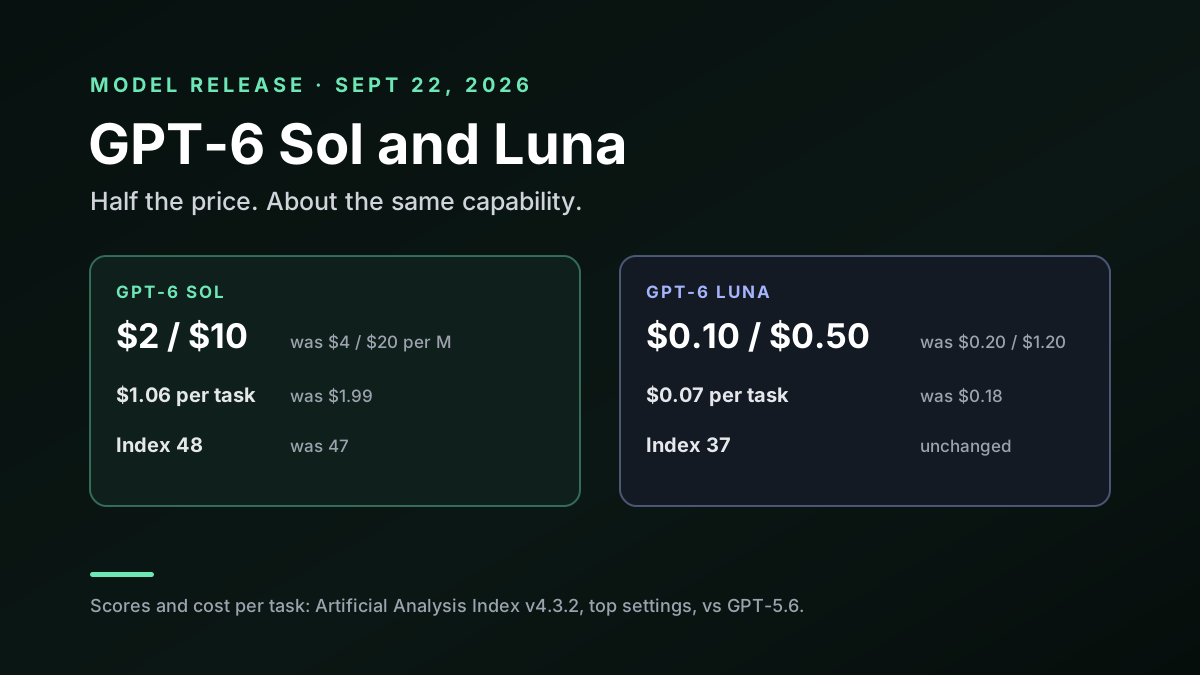
GPT-6 Sol and Luna: Half the Price, and Where Each One Fits
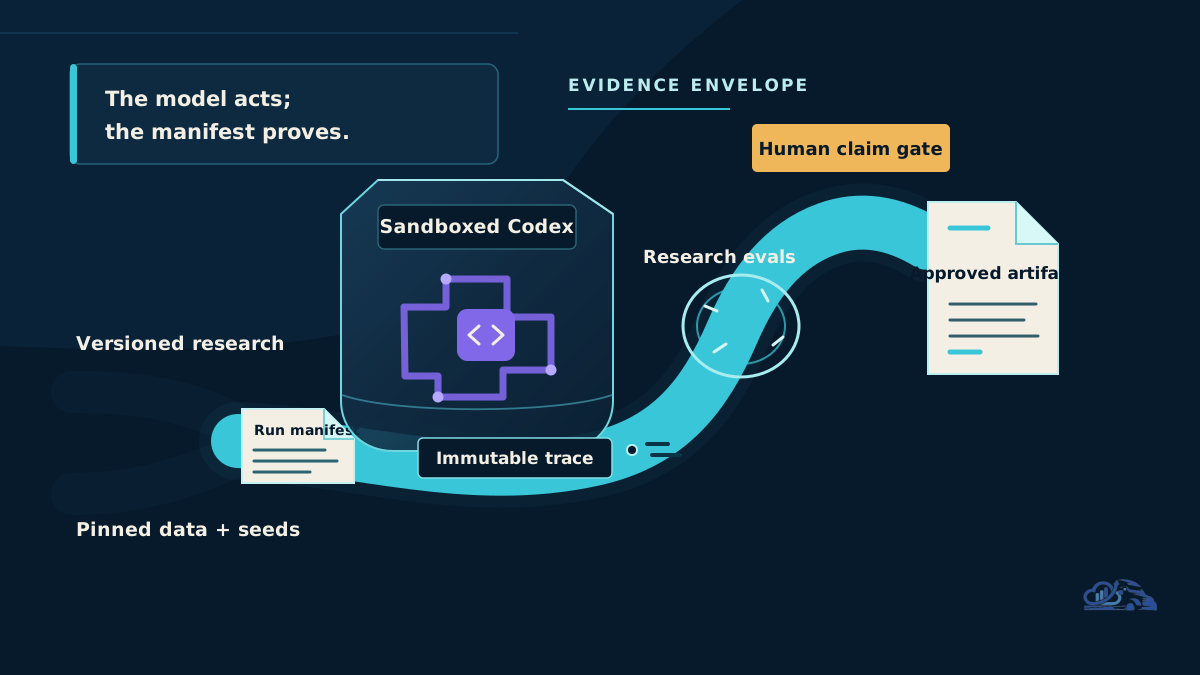
ChatGPT for Academic Researchers: GPT-5.6 Sol Pro
Amazon Bedrock AgentCore Observability: Per-Agent Logs and Traces