Multi-Tenant Isolation: What Azure Cobalt 200 Changes
Multi-tenant isolation can fail below the OS. Azure Cobalt 200 moves Rowhammer defense into the memory controller: what that means for zero-trust buyers.
Microsoft’s decision to build Rowhammer protection into Azure Cobalt 200’s custom memory controller exposes a hard problem for multi-tenant isolation: bit flips in physical DRAM can undermine the hypervisor and container boundaries cloud teams trust. This guide explains what Cobalt 200 changes, what it does not solve, and what buyers should ask about hardware trust boundaries, confidential computing, attestation, and defense in depth, using the isolation-control mapping and evidence gates Van Data Team applies in production reviews.
Microsoft's Azure Cobalt 200 Rowhammer design strengthens multi-tenant isolation by moving protection into a custom memory controller, beneath the software boundaries most cloud teams audit. For security architects and platform engineers, the buyer problem is no longer just whether hypervisor and container policies are configured correctly. It is whether the physical memory layer can violate those policies, what control stands in the way, and what evidence the customer can obtain.
At Van Data Team, we make that problem operational. We map each required isolation guarantee to its enforcement layer, provider, evidence, review gate, monitoring signal, and fallback. This guide turns Cobalt 200 into a reusable pre-production review. Start with the control map below, then use the provider questions to close evidence gaps.
Key Takeaways
The practical conclusion is that hardware hardening improves the cloud trust boundary, but it does not replace the controls above it.
For related implementation context, see reduce AWS costs without slowing delivery.
- Rowhammer is a physical memory-integrity attack that can corrupt data outside the attacker's allocation and undermine software isolation.
- Cobalt 200 puts Rowhammer protection in Microsoft's custom memory controller, with memory encryption enabled by default and support for Arm CCA.
- Rowhammer mitigation, memory encryption, confidential computing, and hypervisor isolation address different threats; none is a substitute for the others.
- Zero trust architecture at the hardware layer means naming the unavoidable dependency, demanding suitable evidence, and planning for failure.
- Buyers should approve the exact service configuration and evidence path, not a processor feature in the abstract.
Microsoft moved Rowhammer protection into the memory controller
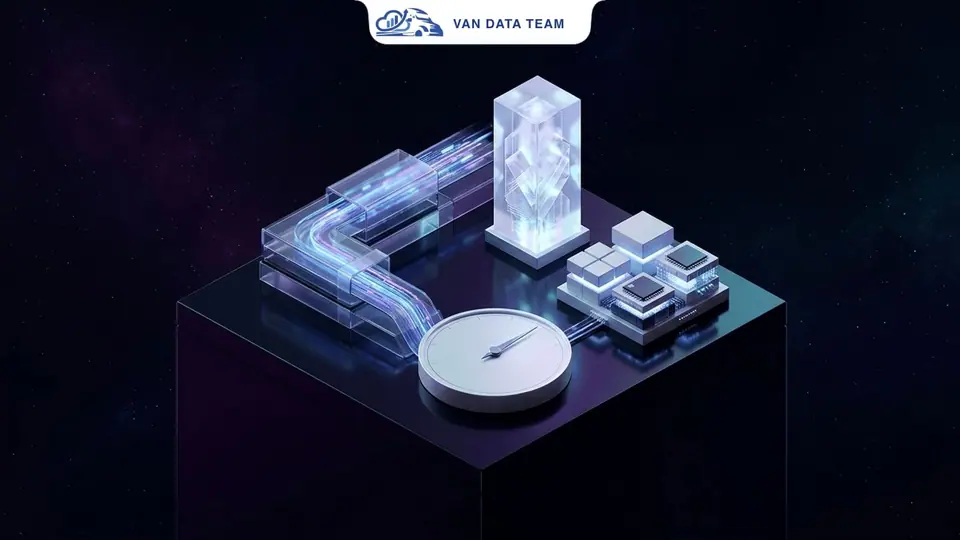
Microsoft placed the Rowhammer control close to DRAM, where the memory-access behavior that creates the threat can be observed and managed. Its Cobalt 200 engineering account states that the defense is built into the processor's custom memory controller.
The processor specifications provide useful context, but they are not security-assurance evidence by themselves.
| Decision-relevant fact | Verified context |
|---|---|
| Generation | Microsoft's second-generation Arm cloud CPU |
| Compute design | 132 active cores with per-core DVFS |
| Process | TSMC 3 nm |
| Workload performance | Microsoft reports about 50% generational improvement for cloud-native workloads |
| Memory system | 12 memory channels |
| Related security controls | Custom memory controller, Rowhammer protection, default memory encryption and Arm CCA support |
Processor performance does not prove security effectiveness. Record performance, mechanism, and assurance separately.
Microsoft's performance wording is deliberately bounded
Microsoft describes its Rowhammer design goal in the engineering post this way:
"without imposing the usual performance penalty"
Separately, the Azure product announcement says default memory encryption has "negligible performance impact." Neither statement says the control is free. One describes the Rowhammer design goal; the other describes vendor-reported behavior for encryption. A buyer should still measure throughput, tail latency, error behavior, and cost with the intended workload and security configuration.
The mechanism remains Microsoft's engineering account
According to Microsoft, its approach uses more constrained telemetry to detect unusual fleet-wide behavior while aligning with confidential-computing principles. Microsoft also contrasts its design with older proprietary DRAM mitigations that it describes as approximate, hard to inspect, and prone to "security by obscurity."
Those statements explain the vendor's design rationale. They do not replace independent assessment, a contractual isolation commitment, customer-visible attestation, or testing on the service configuration you plan to run.
Why Rowhammer threatens multi-tenant isolation
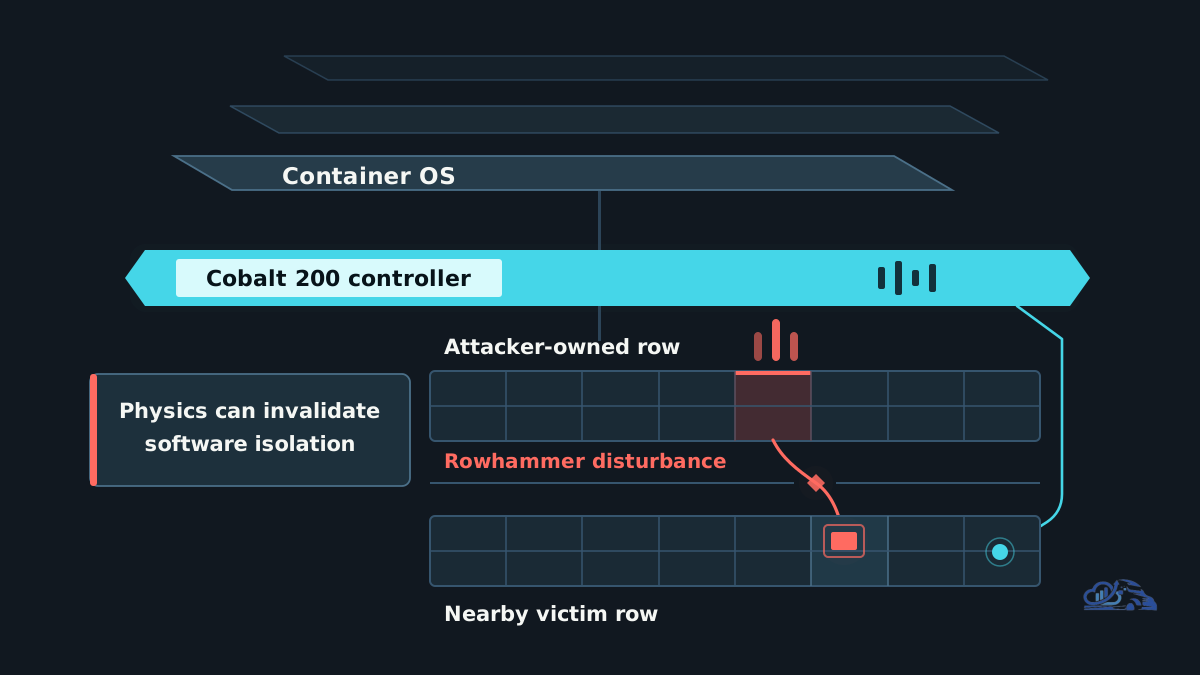
Rowhammer threatens tenant separation because it can change memory without passing through the logical write permissions that the hypervisor, operating system, or application expects to enforce. According to Microsoft's Cobalt engineering account, repeated access to selected DRAM rows can disturb physically nearby rows and cause a DRAM bit-flip in memory the attacker does not own.
A lower-layer bit change can corrupt workload data, execution state, or security-sensitive metadata that upper layers assume is trustworthy. The normal access-control path may never observe an unauthorized write because the fault arises from physical memory behavior.
| Layer | Expected guarantee | What a lower-layer failure can invalidate |
|---|---|---|
| DRAM and memory controller | Stored bits remain correct; disturbance is mitigated | Every control that consumes corrupted memory |
| Firmware and hypervisor | Physical memory is mapped to the correct guest | VM separation and trusted platform state |
| Guest OS and containers | Processes and workloads stay within assigned boundaries | Sandbox assumptions built on valid pages and metadata |
| Identity and application | Only authorized actors can read or change data | Decisions made from corrupted state |
This is why "we configured the sandbox correctly" is an incomplete answer. Logical access control answers who may request a write. Hardware memory integrity answers whether memory can be influenced without that authorized write.
Consider an illustrative review. Maya, a security architect, is approving a shared analytics platform. Her threat model says an untrusted tenant cannot write another tenant's pages because the hypervisor owns the mappings. Rowhammer changes the review question: can a co-tenant influence a physical bit without using that mapping path? Maya does not discard the hypervisor control. She adds the memory controller, provider mitigation, available evidence, and incident path to the same dependency map.
The operating lesson is simple: find the layer that enforces the guarantee you actually need. If the requirement is "one tenant cannot corrupt another tenant's workload state," a container policy alone cannot close the argument.
What Cobalt 200 changes, and what it does not
Cobalt 200 strengthens the hardware foundation with related but non-interchangeable controls: controller-level Rowhammer protection, default memory encryption, and Arm Confidential Compute Architecture support. Each control has a different job.
For related implementation context, see AI agent development.
| Control | Primary job | Enforcement point | What it does not establish |
|---|---|---|---|
| Rowhammer protection | Reduce disturbance-induced memory corruption risk | Custom memory controller | Elimination of every present or future Rowhammer variant |
| Default memory encryption | Protect memory confidentiality | Memory controller and platform memory path | Prevention of physical bit-flips or proof of tenant-visible keys |
| Arm CCA support | Enable hardware-backed isolation from the hypervisor and host OS | Processor and platform | Availability, configuration, or attestation for a specific cloud service |
| Hypervisor and container isolation | Separate guests, processes, and workload resources | Provider platform and guest software | Integrity of the DRAM substrate beneath them |
Moving mitigation into the memory controller matters because enforcement sits below the software that depends on correct memory. It also moves more of the trust boundary into silicon and provider operations. Most customers cannot inspect that implementation line by line.
Zero trust does not mean pretending hardware can be removed from the trust model. It means making the dependency explicit and matching it with evidence. The provider controls silicon design, firmware, fleet telemetry, hardware lifecycle, and platform response. The customer controls workload identity, least privilege, secrets, deployment choices, application isolation, logging, and escalation. Documentation, attestation, audit material, contracts, advisories, and customer testing form the shared evidence layer.
Processor support is not the same as service assurance. Arm CCA support becomes useful to a buyer only when the relevant service exposes a documented confidential-computing mode, the configuration is repeatable, and the attestation evidence answers the buyer's threat model.
Rowhammer also remains an active research problem. The MINT research paper explains that existing low-cost in-DRAM trackers have been broken by crafted access patterns while researchers continue developing new mitigation designs. That paper does not assess Cobalt 200 or reveal its internals. It supports the prudent conclusion: mitigation reduces risk; it does not end the attack class.
Defense in depth therefore stays intact. Keep hypervisor separation, least privilege, secrets management, workload monitoring, incident response, and change review. If provider evidence is insufficient for the workload's impact, narrow the workload scope or choose stronger placement isolation rather than silently converting an unknown into assurance.
A buyer workflow for hardware-backed trust
Cloud buyers should approve hardware-backed isolation through a repeatable evidence workflow, not through a feature checklist. The workflow starts with the required outcome and ends with an owned failure response.
Ask about scope before mechanism
The first provider questions should define what is protected:
- What exact cross-tenant behavior is the Rowhammer control designed to prevent?
- Which service, instance family, hardware revision, firmware state, and configuration receive it?
- Is the isolation commitment contractual, documented as product behavior, or described only in engineering material?
- Which Rowhammer variants, access assumptions, or deployment conditions remain outside scope?
- How does the provider reassess the control as attack techniques evolve?
Ask what the tenant can verify
A useful confidential-computing discussion must reach the evidence path:
- What can the tenant attest about the processor, firmware, confidential mode, and workload launch state?
- Does CCA support translate into an available service configuration for the intended region and workload?
- Which measurements are customer-visible, and which remain provider-only?
- How are attestation roots, endorsements, revocation, evidence retention, and failed verification handled?
- What change notice is issued when hardware, firmware, or the attestation chain changes?
In a hypothetical procurement review, Luis, a platform engineer, finds "CCA supported" in the processor material but no tenant-visible attestation path for the intended service. He records the chip capability as verified and deployment assurance as open. The feature is real, but production approval waits for service-specific configuration and evidence.
If the answer is "the provider monitors it," ask what the customer receives. A private fleet signal may be operationally valuable without being customer-verifiable evidence.
Ask how detection becomes response
Observability matters only when it triggers an owned action. Ask what unusual behavior the provider can detect without exposing confidential workload data, what notification the customer receives, and how suspected hardware is contained or retired. The incident path should cover evidence preservation, workload relocation, secrets handling, recovery, and post-incident review.
Performance claims need the same discipline. Test the intended workload under the intended security mode. Measure latency, throughput, retries, error rates, recovery behavior, and infrastructure cost. Keep Rowhammer mitigation, memory encryption, and confidential-computing results separate so a favorable result for one control is not reused as evidence for another.
Build a trust-boundary register
A trust-boundary register turns the architecture discussion into an auditable production artifact. Copy this structure into the architecture decision record, risk register, or platform control catalog.
| Register field | Example entry for a Cobalt 200 evaluation |
|---|---|
| Required guarantee | A co-tenant cannot corrupt the workload's memory through DRAM disturbance |
| Threat or failure mode | A Rowhammer variant escapes mitigation, unapproved hardware is scheduled, or approved state changes |
| Enforcement layer and owner | Memory controller and provider platform; provider owns design and operation, customer owns workload placement |
| Evidence held | Engineering description, product documentation, service configuration, and attestation output if exposed |
| Evidence missing | Independent assessment, contractual scope, exact revision coverage, or service-specific attestation |
| Production gate | Approve only when configuration, evidence collection, residual risk, and fallback have named owners |
| Monitoring and response | Watch for attestation mismatch, provider advisory, or hardware change; isolate or relocate, preserve evidence, escalate, and reassess |
| Reassessment trigger | New attack research, firmware change, instance migration, service change, or control-evidence expiry |
Classify evidence instead of blending it together. A vendor announcement, engineering description, product document, visible configuration, attestation result, contractual commitment, independent assessment, and customer test answer different questions. No control will necessarily provide every form, but the gap must be visible.
At Van Data Team, the mistake we see is a review that names controls but not gates. Use an architecture gate for the dependency map, a security gate for threat scope and residual risk, a platform gate for repeatable configuration and evidence collection, and a production gate for monitoring, escalation, fallback, and ownership. A change in hardware, firmware, service behavior, or threat research should reopen the decision.
Record unknowns instead of laundering them into trust
Public sources do not establish the exact internal tracking design, an independent assessment of the Cobalt 200 Rowhammer defense, its contractual scope, customer-visible attestation for every relevant service, or workload-specific performance under your security configuration.
Assign each unknown to an owner and closure artifact. Platform engineering should obtain the service and hardware matrix. Security should request threat scope, audit evidence, attestation details, and contractual language. Performance engineering should test the real workload. The risk owner should accept, compensate for, or reject the remaining gap.
A scoped founder-led hardware trust review with Van Data Team produces an isolation dependency map, provider questionnaire, evidence-gap register, review-gate design, monitoring and escalation runbook, and implementation scope. The useful output is not a generic cloud-security score. It is a decision package your security, platform, procurement, and incident teams can operate.
How Van Data Team Makes This Operational
At Van Data Team, we turn multi-tenant isolation into an operating workflow. We map the current handoffs among security, platform, procurement, and incident response, then connect each required guarantee to its source system, enforcement layer, owner, decision point, review gate, and recovery path.
For Cobalt 200, that means separating Microsoft’s stated controls (memory-controller Rowhammer mitigation, default memory encryption, and Arm CCA support) from independently reviewed evidence and service-specific guarantees. Attestation can verify disclosed properties and configuration state; it should not be treated as proof of silicon internals the provider does not expose.
The resulting delivery plan defines:
- Which signals to collect, such as hardware identity, attestation results, policy drift, provider advisories, and isolation-related incidents.
- Which gaps require clear ownership, contractual clarification, workload testing, or an alternative hosting path.
- Which evidence collection and alerting can be automated, with human approval retained for trust-boundary changes and exceptions.
- Which dashboard and runbook guide action when evidence expires, configuration drifts, or a new Rowhammer variant changes the risk assessment.
The outcome is an actionable control map, not a blanket claim that hardware makes a workload safe. It keeps hardware mitigation inside defense in depth while giving the team a repeatable basis for approving, monitoring, and revisiting provider trust.
Conclusion
Azure Cobalt 200 matters because it exposes the real depth of multi-tenant isolation: software separation depends on memory integrity beneath the hypervisor, operating system, and container. Microsoft's controller-level Rowhammer protection hardens that foundation, while default memory encryption and Arm CCA add distinct controls with different purposes.
For related implementation context, see Vietnam-based data engineering.
The durable buyer action is architectural. Map the guarantee, enforcement layer, provider, evidence, review gate, monitoring signal, and failure response. Keep unknowns explicit. Validate the exact service configuration and workload rather than transferring a processor-level claim into a production approval.
A Van Data Team hardware-trust review can turn that map into a provider question set, evidence register, production gates, attestation workflow, and incident runbook. The goal is not to trust hardware blindly or reject it categorically. It is to make every unavoidable trust decision visible, reviewable, and recoverable.

Founder of Van Data Team. Builds Vanaxity, the AI agent system for SEO, GEO, and AEO, and leads data engineering delivery for B2B teams.
About the authorArticle FAQ
Questions readers usually ask next.
These short answers clarify the practical follow-up questions that often come after the main article.
Need a similar system?
If this article maps to a workflow your team already operates, the next step is usually a scoped review of the system, constraints, and rollout path.
Consultation
Scope your next AI workflow.
Share the system and blockers. We will map fit, gaps, and the next step.