Google DeepMind Launches $10M Multi-Agent AI Safety Initiative: What Production Teams Should Learn
Google DeepMind's $10M multi-agent safety initiative in practice: map agent roles, tool access, handoffs and approval points before you deploy.
Google DeepMind Launches $10M Multi-Agent AI Safety Initiative is a June 2026 funding call from Google DeepMind, Schmidt Sciences, the Cooperative AI Foundation, ARIA, and Google.org to support research into risks that emerge when many AI agents interact, delegate, negotiate, use tools, and transact online.
The practical takeaway is bigger than the funding amount: teams building agent workflows now need safety controls for networks of agents, not just better prompts for one assistant. According to Google DeepMind's original announcement, the initiative focuses on system-wide behavior in multi-agent environments.
For founders, operators, data leaders, and technical teams, this is not only a research story. It is a production design problem. If one agent researches, another validates, another updates a dashboard, and another triggers a customer-facing action, your risk is no longer contained inside a single chat window.
At Van Data Team, we start by turning agent ideas into operational maps: roles, tool permissions, human review gates, logs, dashboards, and escalation paths. That is the same operating layer we bring to AI agent development, where the goal is not just to make an agent work once, but to make it reliable under pressure.
This guide explains what the initiative means, why multi-agent safety is different, and how production teams can build safer workflows before autonomy expands.
Key Takeaways
- Google DeepMind's initiative signals a shift from single-model safety toward the safety of interacting AI systems.
- Production teams should map agent roles, tool access, shared memory, handoffs, approval points, and recovery paths before deploying multi-agent workflows.
- The biggest operational risks are not only bad answers. They include prompt injection, unauthorized tool use, weak escalation, coordinated abuse, and untraceable decisions.
- Human review should be placed before irreversible, customer-facing, financial, compliance-sensitive, or brand-sensitive actions.
- Agent observability needs to cover interactions, tool calls, confidence signals, logs, review decisions, and failure recovery, not just final outputs.
What Google DeepMind Announced
Multi-agent AI safety is the discipline of understanding and controlling risks that emerge when multiple AI agents interact with each other, with tools, and with external systems. It goes beyond testing whether one model gives a safe answer. It asks whether a network of agents behaves safely as a system.
That distinction matters. A single assistant can be reviewed by looking at its response. A multi-agent workflow may include:
- A research agent that gathers evidence.
- A validation agent that checks claims.
- A reporting agent that writes a summary.
- A workflow agent that updates a CRM, data warehouse, or customer record.
- A human reviewer who approves high-risk steps.
The system can fail even if each agent looks reasonable in isolation. One agent may pass along poisoned context. Another may over-trust a weak source. A third may trigger an action before a reviewer sees the risk. This is why MIT Technology Review's coverage framed the issue around what happens when many agents begin interacting across the internet.
A simple example makes the concern concrete. Imagine a revenue operations team uses agents to research account changes, draft renewal notes, update pipeline forecasts, and create executive reporting. If the account research agent accepts a malicious instruction from a web page, the reporting agent may summarize corrupted data, and the workflow agent may push that mistake into a dashboard used by leadership. The safety issue is not one bad sentence. It is the chain of trust.
Why Multi-Agent Safety Changes the Production Problem
Single-agent safety usually focuses on output quality, refusal behavior, data leakage, and hallucination. Those still matter. But multi-agent systems add system-level risks because agents can influence each other.
Google DeepMind's announcement points to agents built by different organizations interacting across digital environments. Crypto Briefing summarized the same shift as a move toward studying collective AI behaviors, or the dynamics that arise when AI systems stop working alone.
For production teams, that creates several practical questions:
- Which agents are allowed to exchange messages?
- Which agent is allowed to use which tool?
- What state can agents write to or read from?
- What happens when agents disagree?
- Which actions require human approval?
- Which logs prove what happened after the fact?
The mistake we see is treating a multi-agent system as a collection of isolated chatbots. That hides the real risk. The handoffs, shared memory, tool calls, and approval paths are where many failures appear.
| Risk | Signal to Monitor | Practical Guardrail |
|---|---|---|
| Prompt injection | Agent instructions change after reading external content | Separate system instructions from retrieved content and scan tool inputs |
| Unauthorized tool use | Agent requests tools outside its role | Use role-based permissions and deny-by-default tool access |
| Coordinated abuse | Multiple agents repeat or amplify the same unsafe action | Monitor patterns across agents, not only individual outputs |
| Automated scams | Agents generate persuasive messages at scale without review | Require approval for outbound or customer-facing communication |
| Weak escalation | Low-confidence outputs still move downstream | Route low-confidence or conflicting results to a reviewer |
| Untraceable decisions | Teams cannot reconstruct who did what | Log prompts, tool calls, sources, approvals, and final actions |
This is where agent safety becomes an operations discipline. You need architecture, observability, review burden planning, and recovery design. A safe demo is not enough.
A Practical Implementation Framework
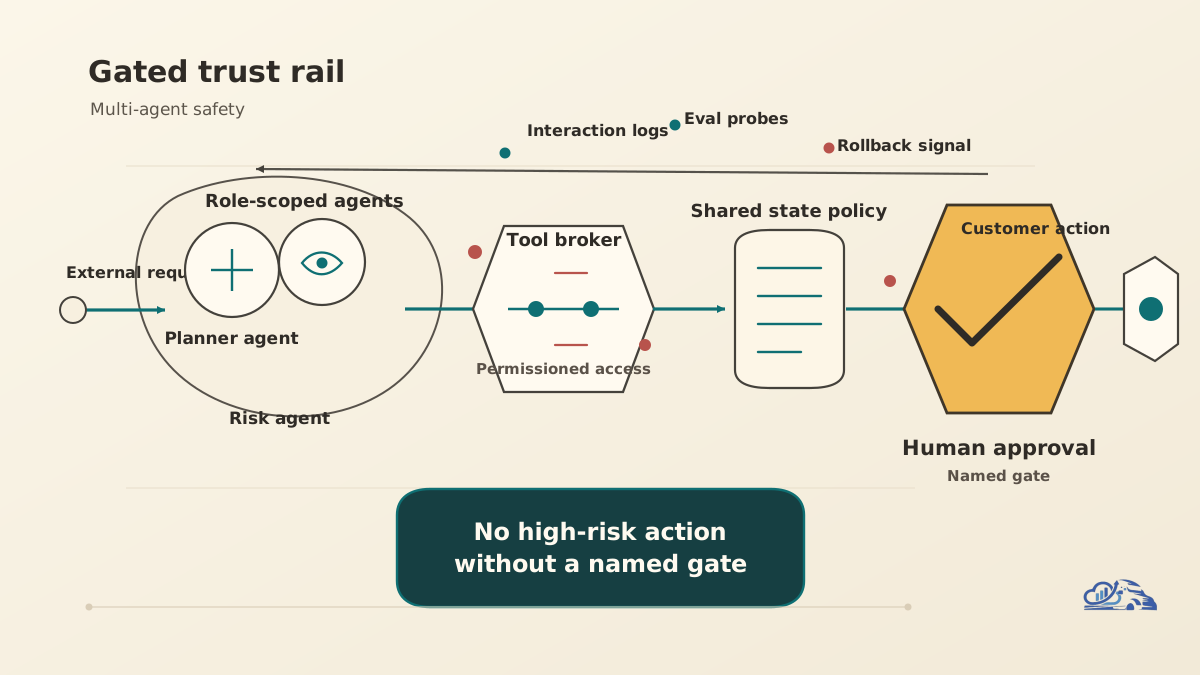
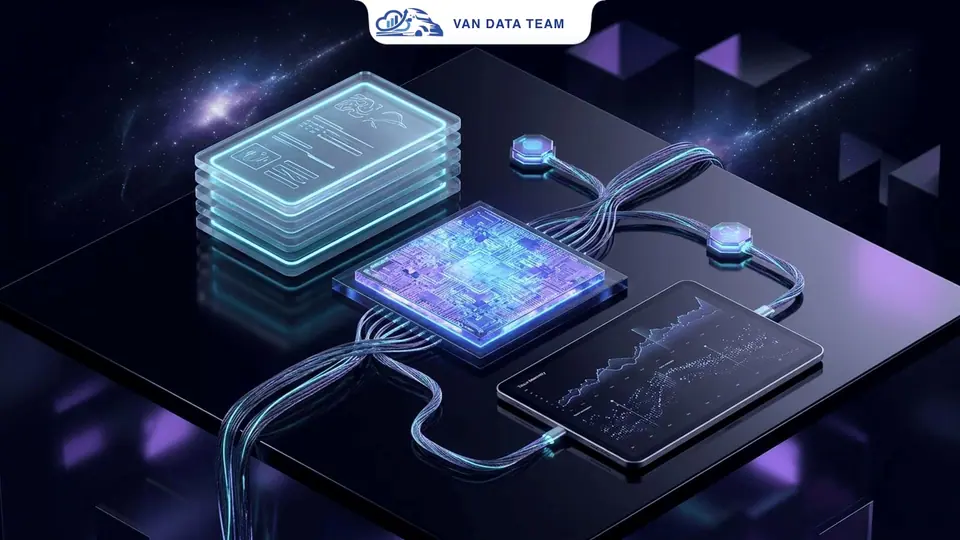
At Van Data Team, we map the agent system as a chain of decisions. Inputs flow into agent roles, then into tool calls, shared state, review gates, approved actions, and monitoring dashboards. Mapping it this way forces the team to name every handoff before the system goes live.
A practical architecture includes seven layers:
- Agent registry: Define each agent's role, owner, purpose, allowed inputs, allowed outputs, and risk level.
- Tool broker: Put tool access behind permission checks instead of giving every agent broad access.
- Shared state policy: Decide what memory, database records, documents, and intermediate outputs agents can read or write.
- Review gates: Require human approval before irreversible, financial, customer-facing, or compliance-sensitive actions.
- Evaluation layer: Test quality, source grounding, safety behavior, disagreement handling, and adversarial inputs.
- Observability layer: Capture traces, logs, tool calls, source links, confidence signals, reviewer decisions, and rollback events.
- Recovery layer: Define what happens when an agent fails, times out, exceeds budget, loops, or produces conflicting output.
These controls affect cost and latency. More review gates slow delivery. More validation agents consume more tokens. More observability creates more storage and dashboarding work. But the alternative is a system where nobody can explain why an action happened.
For teams that already have agents in production, a scoped workflow review can produce concrete outputs: an agent interaction map, a permission matrix, a review-gate plan, a logging gap list, and an implementation scope for safer deployment. That is usually more useful than a broad AI strategy session.
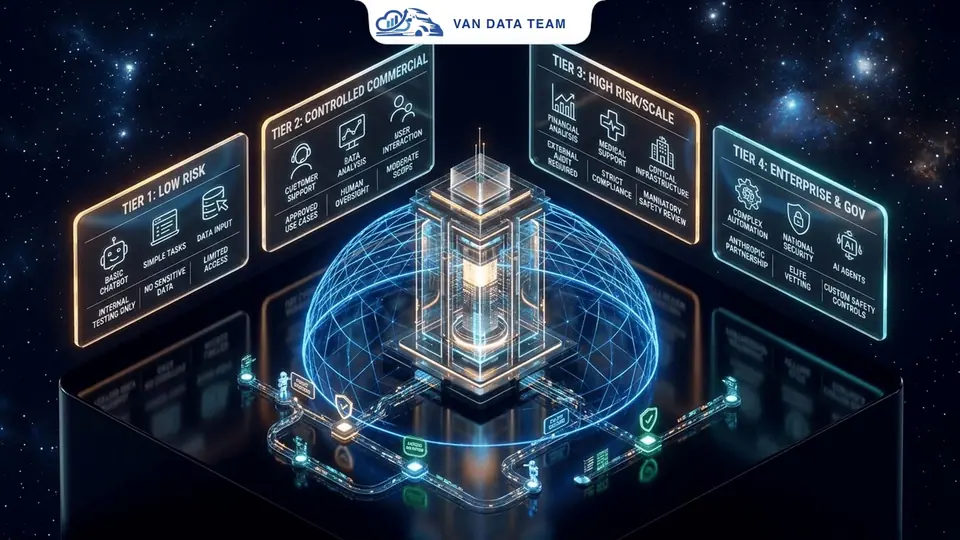
If you are designing systems where agents support decision-making, start with AI agents with human review before expanding autonomy. Human review is not a sign that the agent failed. It is how high-risk workflows stay usable.
Best Practices for Safer Workflows
The best practices are straightforward, but they require discipline.
First, build role boundaries. A research agent should not be able to update billing records. A reporting agent should not be able to approve account changes. A workflow agent should not be able to rewrite its own tool policy.
Second, limit tool access by task and environment. Development, staging, and production should not have the same permissions. A demo agent can be playful. A production agent touching customer data needs tighter controls.
Third, monitor interactions, not just outputs. If agent A passes a weak claim to agent B, and agent B turns it into an executive recommendation, the final paragraph may look polished while the underlying chain is broken.
Fourth, test adversarial and accidental failures. That includes prompt injection from web pages, conflicting source data, stale dashboard values, low-confidence classification, tool timeouts, duplicate actions, and approval bypass attempts.
Fifth, design escalation early. A useful workflow says what happens when confidence is low, the agent disagrees with another agent, a tool fails, or a reviewer rejects the output. The AI agent ops playbook is the right operating mindset here: escalation is part of the product, not an afterthought.
A compact readiness checklist helps teams move from theory to implementation:
- Each agent has a named role, owner, and risk level.
- Each tool has an allowlist by agent and environment.
- External content is treated as untrusted input.
- Shared memory has read and write rules.
- High-impact actions require approval.
- Logs capture the full chain from input to final action.
- Dashboards show failures, retries, cost, latency, and review load.
- Reviewers can reject, approve, or route work back with reasons.
- Recovery paths exist for failed tools, bad outputs, and runaway loops.
- Evaluation tests include normal cases, edge cases, and adversarial cases.
Examples for Operators
A multi-agent research workflow is the easiest place to start. One agent gathers sources, another extracts claims, a third checks contradictions, and a human reviewer approves the final brief. Van Data Team builds multi-agent systems on the same principle: in alice/ai, a supervisor hands each request to a specialised sub-agent with a short, relevant toolset, so the value comes from structure, not blind autonomy.
The guardrail is source traceability. Every claim should point to evidence. If sources conflict, the workflow should stop and ask for review instead of smoothing over the disagreement.
A reporting workflow has a different risk profile. In agentic BI and reporting, an agent may explain revenue movement, investigate anomalies, or draft a weekly performance summary. The safety question is not only whether the writing sounds right. It is whether the numbers came from the right table, the query was appropriate, the time window was correct, and the dashboard can show how the answer was produced.
A customer-impacting workflow is higher risk. Suppose an agent classifies a customer request, another agent looks up account history, and a workflow agent proposes a credit, cancellation, or plan change. That final action should not execute automatically unless the policy is narrow, tested, reversible, and logged. For most teams, a reviewer should approve the action until the failure rate and recovery path are well understood.
A security workflow needs even stricter boundaries. If an agent reads external tickets, web pages, emails, or documents, it may encounter prompt injection. If several agents share the contaminated instruction, the system can amplify it. The control is not one magic prompt. It is isolation, scanning, permissioning, review, and monitoring across the chain.
Failure Modes and Evaluation Criteria
The most common failure mode is over-trusting the demo. Demos are usually clean. Production inputs are messy, adversarial, incomplete, duplicated, late, and politically sensitive.
Another failure is broad permissioning. Teams give every agent every tool because it makes the first prototype easier. That decision creates long-term risk. Permissions should narrow as the system gets closer to production.
A third failure is measuring only final answer quality. A final report may be readable while the underlying workflow wasted tokens, skipped a source, used stale data, or ignored a reviewer note. Evaluation needs to include system behavior.
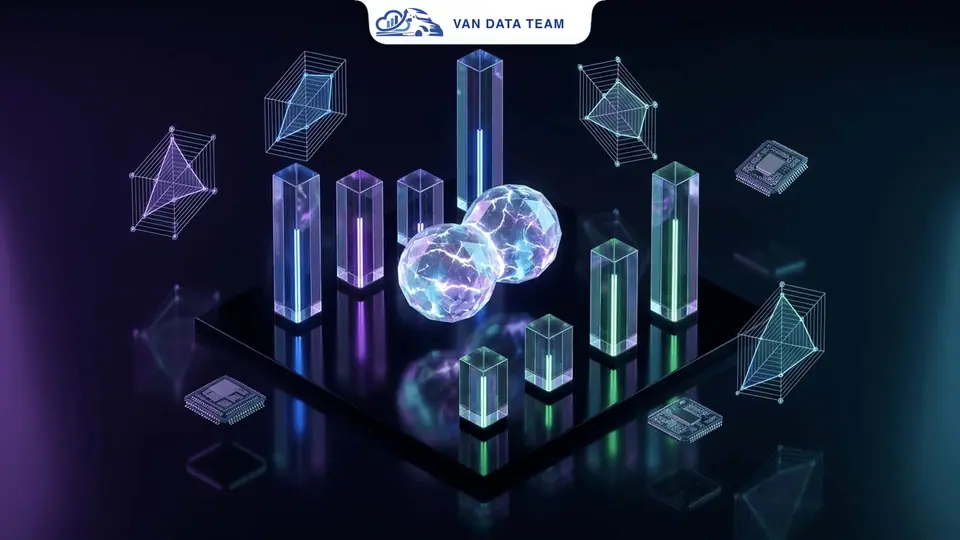
| Dimension | Evaluation Question | Evidence to Review |
|---|---|---|
| Quality | Did the workflow produce a useful result? | Output review, source checks, reviewer notes |
| Safety | Did agents stay inside their roles? | Permission logs, rejected tool calls, policy violations |
| Cost | Did token and tool usage stay within budget? | Cost dashboard, retry counts, agent loops |
| Latency | Did review and tool calls meet workflow needs? | Trace timing, queue time, approval time |
| Observability | Can the team reconstruct the decision? | Prompt logs, tool traces, source links, approvals |
| Recovery | What happened after failure? | Rollback events, retries, escalation records |
| Review burden | Are humans reviewing the right work? | Approval volume, rejection reasons, reviewer capacity |
The best evaluation program starts small. Test one workflow. Run it against normal inputs, bad inputs, stale inputs, malicious inputs, and ambiguous inputs. Then measure how often the system asks for help, how much it costs, how long it takes, and whether the reviewer can understand the chain of reasoning.
That is the difference between agent experimentation and agent operations.
Conclusion
For production teams, the next step is clear: map agent interactions, restrict permissions, add human review, monitor behavior, evaluate failure modes, and build recovery paths before expanding autonomy. Strong prompts help, but they are not the control plane.
Van Data Team can help turn this into concrete delivery work: a scoped agent workflow review, a risk signal map, a permission and review-gate design, an observability dashboard gap review, and an implementation plan for safer agent operations. The teams that get this right will not be the ones with the most agents. They will be the ones that can explain, monitor, and control what their agents do.

Founder of Van Data Team. Builds Vanaxity, the AI agent system for SEO, GEO, and AEO, and leads data engineering delivery for B2B teams.
About the authorArticle FAQ
Questions readers usually ask next.
These short answers clarify the practical follow-up questions that often come after the main article.
Need a similar system?
If this article maps to a workflow your team already operates, the next step is usually a scoped review of the system, constraints, and rollout path.
Free safety review
Map Multi-Agent Safety Controls
Translate Google DeepMind's $10M multi-agent safety initiative into controls for your agents, tools, review gates, observability, and accepted-output cost.
- Agent role and permission map for reasoning, acting, and tool-use steps
- Human review checkpoint plan for high-risk handoffs and customer-facing actions
- Observability checklist for logs, dashboards, retries, fallback behavior, and accepted-output cost
- Framework fit notes for LangGraph, LangChain, CrewAI, and runtime controls
Consultation
Scope your next AI workflow.
Share the system and blockers. We will map fit, gaps, and the next step.