September 21, 2026
AI Slowdown Lawsuit: Is Safety Coordination Collusion?
An AI slowdown lawsuit says Anthropic, OpenAI, SpaceXAI and Google broke antitrust law by agreeing to slow down. Here's the claim, the defenses and what's next.
Article focus
Four paying subscribers have sued Anthropic, OpenAI, SpaceXAI and Google, alleging their public support for a coordinated AI slowdown is an illegal agreement to restrict competition. Here's what the complaint claims, the questions a court will weigh, and what it means for teams building on these models.
Section guide
The AI slowdown lawsuit is a proposed class action filed on September 18, 2026, by four paying subscribers of ChatGPT, Claude, Grok and Gemini. It alleges that Anthropic, OpenAI, SpaceXAI and Google broke US antitrust law by agreeing to slow their AI development, which it says cuts what subscribers get for their money. The companies hadn't responded publicly. A court has yet to decide whether public support for a slowdown counts as an illegal agreement.
Key Takeaways
- Four paid subscribers sued Anthropic, OpenAI, SpaceXAI and Google in federal court in San Francisco on September 18, 2026.
- They say that publicly backing a joint slowdown was a deal among rivals to cut output, which US antitrust law forbids.
- The key evidence is timing: Dario Amodei's September 12 essay calling for coordination, and same-day agreement from Sam Altman, Elon Musk and Demis Hassabis.
- The big questions: do public statements prove a deal, has anyone been harmed yet, and how much does safety count?
- Nothing changes for API users today. But the case could make labs wary of working on safety together in public.
What Does the AI Slowdown Lawsuit Claim?
It claims the four leading AI labs made an illegal deal not to compete as hard. The plaintiffs say that hurts people who pay for AI.
Reported fact: The case is Buist v. Anthropic PBC, No. 3:26-cv-10693, in the US District Court for the Northern District of California, according to Bloomberg Law.
Four named plaintiffs pay for ChatGPT, Claude, Grok or Gemini. They're suing on behalf of a proposed nationwide class of other paid subscribers, the AP reported.
The legal claim is under Section 1 of the Sherman Act, which bans agreements that unreasonably restrain trade. Per Bloomberg Law, the plaintiffs want class status, a ruling that the conduct is illegal, and a court order to stop it.
The core argument is simple. Rivals agreed their progress "should be slower than competition would otherwise produce," the complaint says. So subscribers get less for the same price. The plaintiffs frame that as an agreement to restrict output, one of the oldest concerns in antitrust law.
The lead attorney is Nick Rowley of Trial Lawyers for Justice. "The antitrust laws do not permit competitors to decide among themselves that competition is too dangerous," he said, as quoted by CBS News.
None of the four companies replied right away when asked for comment, the AP and Bloomberg Law said.
What Evidence Does the AI Slowdown Lawsuit Cite?
Mostly public statements, and their timing. As reported, the complaint leans on what the leaders said in public, not on a signed contract.
Here's the sequence the plaintiffs rely on, drawn from the AP's reporting on the complaint:
| When | What happened | Why the plaintiffs cite it |
|---|---|---|
| July 2026 | Senior staff at several labs sign a statement about the "intense competitive pressure not to unilaterally slow" | Shows the labs knew slowing alone was costly, the plaintiffs say |
| September 12 | Dario Amodei posts an essay asking all the labs to slow AI down together | The alleged invitation to agree |
| September 12 | Sam Altman, Elon Musk and Demis Hassabis each publicly agree the same day | The alleged acceptance |
| Soon after | Altman says OpenAI won't wait for a legal waiver or a new law to start | Hints the labs would act without legal cover |
| September 18 | Four subscribers file suit in San Francisco | The lawsuit itself |
Amodei's own essay matters here. He acknowledged the antitrust problem, writing that the US government should mediate "or at least enable" the cross-lab talks. He said the government would need to "issue a narrow waiver for certain kinds of safety conversations." No such waiver exists.
Altman's reply cut the other way. OpenAI welcomed a "federal framework that sets consistent safety requirements," he wrote, but "we do not believe we need to wait for an antitrust exemption or legislation to begin the work of providing this confidence." The plaintiffs treat that line as a sign the labs would move ahead anyway.
Our explainer on Pace the Frontier covers what Amodei's plan would do. Its first step, outside checks on Anthropic's own safety promises, is one Anthropic takes alone. The plaintiffs don't challenge steps like that.
Why Would a Safety Slowdown Be an Antitrust Problem?
Because antitrust law rests on one idea: rivals must each decide how hard to compete. A deal to compete less is suspect, whatever the reason.
The plaintiffs are careful about what they don't object to. They don't mind any company slowing its own work for safety. They don't object to the labs asking Congress or the White House to regulate AI, or asking for an antitrust exemption. What they say the law forbids is the "shortcut" of agreeing to "substitute collective restraint for individual accountability," in the complaint's words.
That argument echoes a well-known Supreme Court case. In National Society of Professional Engineers v. United States (1978), an engineering group banned its members from bidding against each other on price. It argued that price competition would lead to cheap, unsafe designs.
The Court said no. Rivals can't decide among themselves that competition itself is harmful, it ruled. Rowley's quote above follows that logic closely.
Not every agreement among rivals is illegal, though. Courts judge most of them under the "rule of reason," weighing harm against real benefits. Joint safety research and many kinds of standard-setting are often lawful. The plaintiffs argue this case is closer to a plain limit on output, which courts treat far more harshly.
This debate started before the suit. On September 17, Kristian Stout of the International Center for Law & Economics wrote that "agreements among rivals to restrain development deserve scrutiny, even when made in the name of safety." He urged labs to try the steps they can take alone, and lawful teamwork, first.
What Defenses Could the AI Companies Raise?
The companies hadn't responded publicly, so we don't know their arguments yet. But the legal questions a court would likely weigh are well known.
- Was there an agreement at all? Under Bell Atlantic v. Twombly (2007), showing that rivals acted in parallel isn't enough. A complaint must plausibly show an actual agreement. Public statements of shared views may or may not meet that bar.
- Has anyone been harmed yet? A slowdown that hasn't clearly happened is harder to turn into damages. Subscribers would need to show they got less than a competitive market would have delivered.
- Was it a request to government? Asking the government to act is generally protected from antitrust claims under the Noerr-Pennington doctrine. Amodei's essay asked for government mediation and a waiver. How much of the conduct counts as petitioning, and how much as private coordination, will matter.
- Do safety benefits count? Under the rule of reason, the companies could argue coordination prevents serious harm. The engineers case shows courts are wary of the claim that competition itself is dangerous, but AI risk hasn't been tested in court.
- Is it one market? The plaintiffs group four subscription products together. How a court defines the market affects how much power the four firms are said to hold.
The honest read: both sides have real arguments. The plaintiffs have unusually public evidence, including a CEO naming the antitrust problem himself. The defendants can point out that no document shows an agreed pace, and that no slowdown is clearly under way. Early rulings on whether the complaint states a plausible claim will tell us more than any prediction.
How Does Politics Complicate the AI Slowdown Lawsuit?
It makes the legal path the labs asked for harder to reach. An exemption would need government support, and that support isn't there right now.
President Trump rejected calls for AI regulation on social media, the AP reported. He has called efforts to limit the technology part of a "conspiracy." On September 19, he said he's forming an AI task force and will appoint an "AI czar," with few details so far.
Opposition to a waiver also crosses party lines. Republican Sen. Josh Hawley said at a recent Senate hearing that "there is no world" in which he'd give "the most powerful companies in the history of the world" an antitrust exemption. Several Democratic leaders have called for broad AI regulation instead.
So the labs face a squeeze. Without a waiver, open coordination on pace carries legal risk. Getting a waiver would need a Congress or White House that, for now, shows little interest in granting one. The US-China angle adds to it, as we covered in our piece on why Beijing and Washington both rejected a slowdown.
Could This Lawsuit Make AI Safety Coordination Harder?
It might. That's the main worry about the case, even among people who take antitrust seriously.
Safety experts have long warned that the race pushes labs to cut corners. A 2025 paper by Nicholas Felstead argued that fear of antitrust law can put labs off useful AI safety coordination. It called for "legal clarity and safe harbours" so labs can work on safety together without breaking the law.
The plaintiffs see the risk the other way round. Rowley told the AP that AI "could kill us all" if safety is left to "private self-serving agreements" between for-profit companies. In their view, safety rules should come from government, in the open, and not from deals among rivals.
Both sides agree the line is blurry today. Stout's analysis offers a rough guide to where it sits:
- Lower risk: each lab hiring its own outside testers, joint testing, and careful work on shared standards.
- Higher risk: rivals agreeing to cap the computing power they train with, or to slow progress together.
That's why a ruling here would matter beyond these four companies. It could show the whole industry where safety cooperation ends and an unlawful pact begins.
What Happens Next in the Case?
Slowly, by legal standards. Antitrust class actions often take years, and the first big test usually comes within months.
A typical path looks like this:
- Service and response. The companies are formally served, then respond to the complaint, usually on an agreed schedule.
- Motion to dismiss. Defendants in cases like this often ask the court to throw out the complaint for failing to plausibly allege an agreement. That's where the Twombly question gets decided.
- Discovery. If the case survives, both sides exchange documents. Private messages between labs would matter far more than public posts.
- Class certification. The court decides whether the four plaintiffs can represent all paid subscribers.
- Settlement or trial. Most antitrust class actions that survive the early stages settle before trial.
Meanwhile, the labs may change how they talk. Lawyers often advise clients in active antitrust suits to avoid public statements about rivals. That could mean less open discussion of shared safety plans, whatever the case's outcome.
Does the AI Slowdown Lawsuit Change Anything for Builders?
Not today. APIs, prices and model access are unchanged. The lawsuit is about consumer subscriptions, and it's at the very first stage.
The indirect effects are worth planning for, though:
- Less open safety coordination. If labs pull back from joint public statements, shared safety practices may develop more slowly or out of view.
- Less predictable releases. Between safety pressure, legal risk and politics, release timing is harder to forecast. Don't build plans around a vendor's promised date.
- Policy swings. An AI czar, a federal framework, or a waiver fight could each change the rules within months.
- Vendor concentration risk. The case describes four firms dominating paid AI. Relying on one of them for everything is a business risk, lawsuit or not.
The practical response is the same one we recommend for any vendor risk. Wrap each model behind your own interface so you can switch providers with a config change. Pin model versions in production, and test each new release on your own tasks before adopting it. Our guide to AI agent evaluation covers how to build that test set.
We made a similar case about AI platform risk: when a vendor's plans can change overnight, being able to switch is your insurance. Our piece on AI slowdown stocks shows how fast the mood can shift.
What Should Teams Watch Next in the AI Slowdown Lawsuit?
A few signals will show which way this is heading, well before any verdict.
- The companies' first responses. Whether they deny any agreement, stress petitioning, or argue safety benefits.
- A motion to dismiss. The ruling on it will show whether public statements can support an antitrust claim.
- Any government move on a waiver. A task force, an AI czar, or a bill would change the legal ground.
- Actual release pace. If major releases keep coming on schedule, the harm claim gets harder to prove.
- Changes in how labs talk. A sudden quiet on joint safety plans would itself be a signal.
For the debate that started all this, see our explainer on why researchers are worried about AI slowing down.
How Van Data Team Helps Teams Plan Around AI Vendor Risk
We help teams build AI systems that keep working when vendors, prices, or policies change. That means model-agnostic designs, pinned versions, and evaluation sets that let you test a new model in a day instead of a month.
The AI slowdown lawsuit is a reminder that the companies behind today's leading models face legal and political pressure you can't control. What you can control is how easily your stack switches between them. Our work on AI agent evaluation and AI agent development cost is a good place to start.
Article FAQ
Questions readers usually ask next.
These short answers clarify the practical follow-up questions that often come after the main article.
Need a similar system?
If this article maps to a workflow your team already operates, the next step is usually a scoped review of the system, constraints, and rollout path.
Book your free workflow review here.
Related articles
View all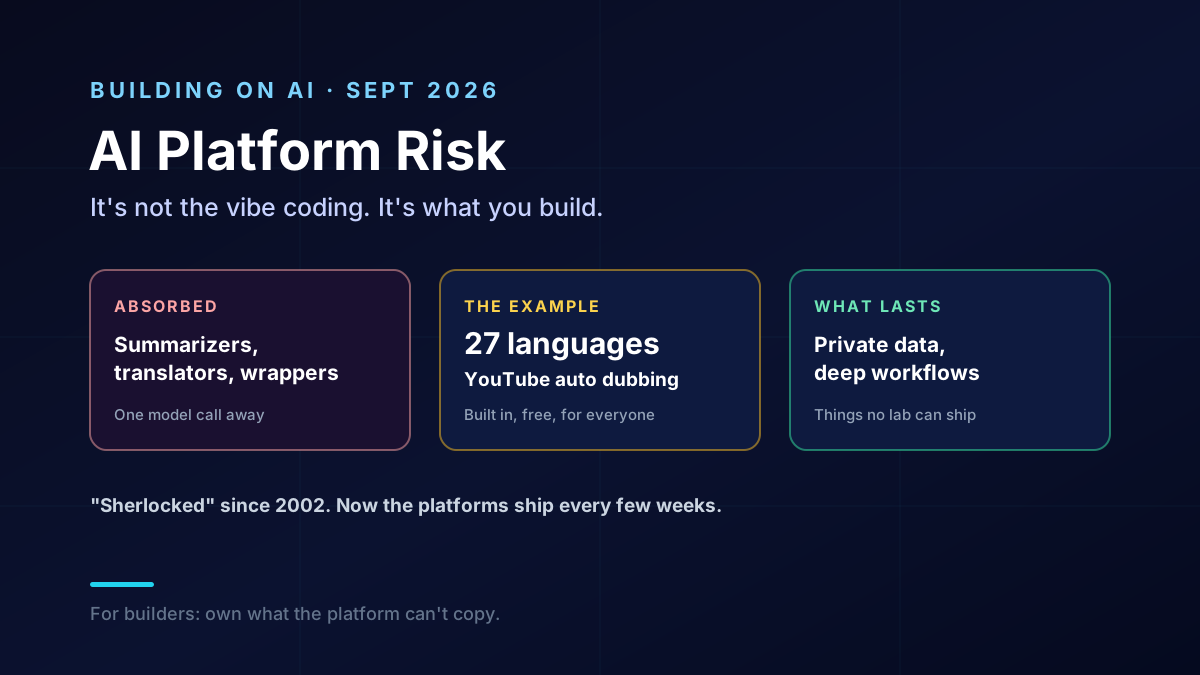
AI Platform Risk: When a Lab Ships Your App as a Feature
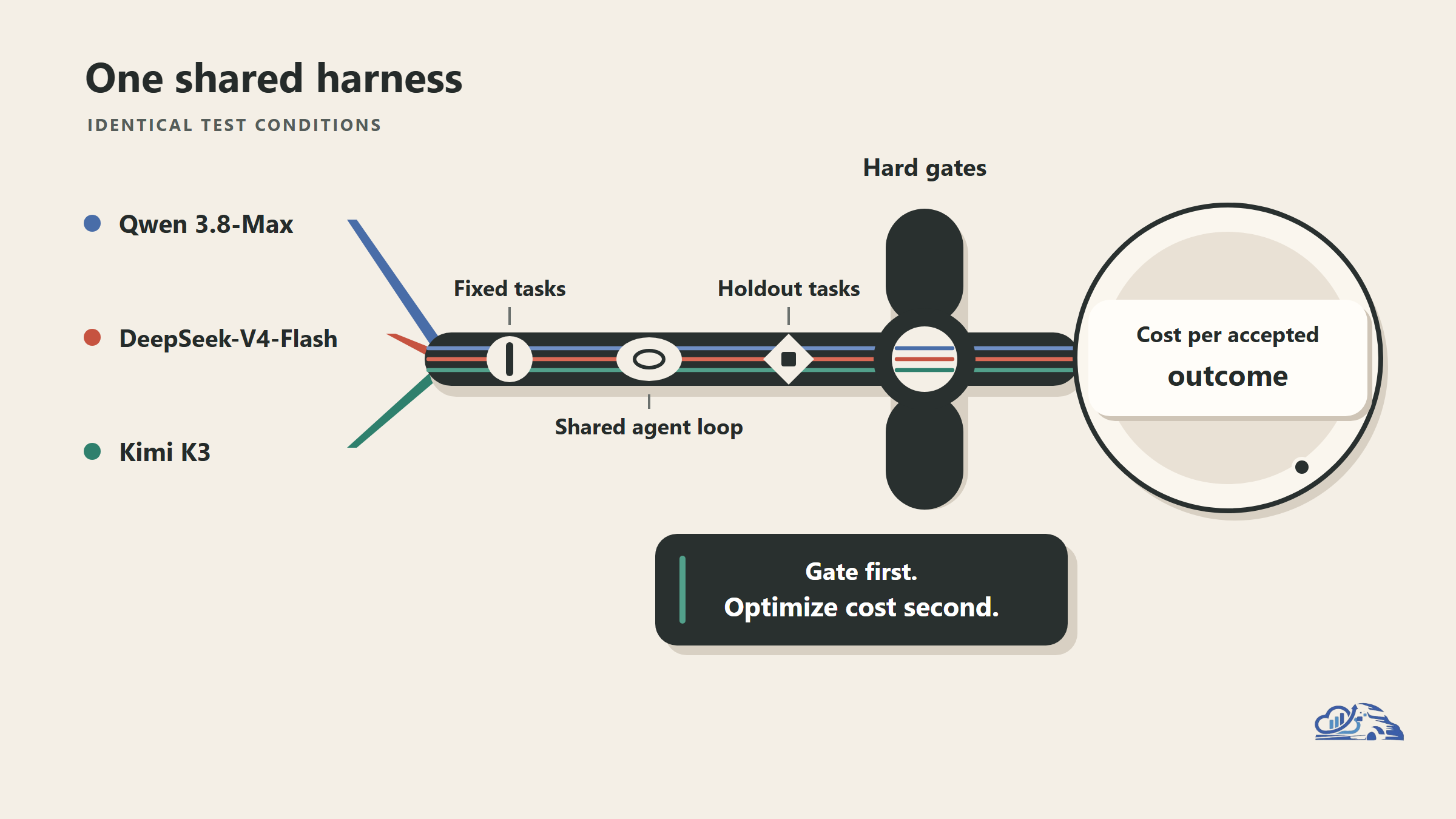
Qwen vs DeepSeek vs Kimi for Agents and Coding
Claude Sonnet 5: a practical guide for production teams