July 31, 2026
Kimi K3 vs Opus 5 vs GPT-5.6 Sol: which model should you use?
Kimi K3 vs Opus 5 vs GPT-5.6 Sol: compare architecture, context, pricing, benchmarks, and choose the right production route for each developer job today.
Article focus
Kimi K3 vs Opus 5 vs GPT-5.6 Sol is a routing decision, not a single-winner contest. Choose Claude Opus 5 for complex agentic coding and high-stakes reasoning. Choose GPT-5.6 Sol for Codex-native and math-heavy work.
Section guide
Kimi K3 vs Opus 5 vs GPT-5.6 Sol is a routing decision, not a single-winner contest. Choose Claude Opus 5 for complex agentic coding and high-stakes reasoning. Choose GPT-5.6 Sol for Codex-native and math-heavy work. Choose Kimi K3 for high-volume coding, open-weight deployment, and lower token costs.
At Van Data Team, we start with the job's acceptance criteria, tools, risk, and fallback path. Our production AI agent development work turns that map into model routes, review gates, telemetry, and rollback rules.
Key Takeaways
The strongest default depends on the workflow, while the safest production policy keeps a measured fallback.
- Claude Opus 5 is the primary route for long tool-use loops, difficult repository work, and consequential reasoning.
- GPT-5.6 Sol is the first route for Codex and OpenAI-native agents, especially when mathematical correctness drives acceptance.
- Kimi K3 is the cheapest option and the only open-weight model, making it strong for volume, control, and self-hosting.
- All three support million-token context (Kimi K3 source; Opus 5 and GPT-5.6 Sol source), but Sol changes the economics after its extended-context threshold.
- Benchmark leadership is task-specific. Production accuracy, cost per accepted outcome, latency, and escalation rate should decide the final route.
Kimi K3 vs Opus 5 vs GPT-5.6 Sol at a glance
Claude Opus 5 leads the supplied general and agentic evidence, GPT-5.6 Sol leads the math-heavy route, and Kimi K3 leads on price and deployment control. The tables separate reported facts from Van Data Team's routing analysis.
Specifications and access
| Model | Release and access | Architecture | Context and output | Fields not supplied |
|---|---|---|---|---|
| Kimi K3 | API released July 16, 2026; open weights released July 27, 2026 under a Modified MIT license | 2.8-trillion-parameter Stable LatentMoE; 896 experts, 16 active, and about 104B active parameters | Native vision and a 1M-token context window | Maximum output, knowledge cutoff, serving hardware, latency, and throughput |
| Claude Opus 5 | Released July 24, 2026 with model ID claude-opus-5 | Not supplied; proprietary | 1M-token context, 128K maximum output, and an about May 2026 knowledge cutoff | Cache pricing, latency, throughput, and serving controls |
| GPT-5.6 Sol | Released July 9, 2026 | Not supplied; proprietary | 1M-token context and up to about 1,050,000 input tokens | Maximum output, knowledge cutoff, cache pricing, latency, and throughput |
The shared context label hides real differences. The cited Opus report lists a large output ceiling, the Sol comparison lists slightly more than its nominal window, and the Kimi guide pairs long context with open weights.
API pricing
| Model | Input | Cached input | Output | Long-context behavior |
|---|---|---|---|---|
| Kimi K3 | $3 per 1M tokens | $0.30 per 1M tokens | $15 per 1M tokens | Flat pricing with no long-context surcharge |
| Claude Opus 5 | $5 per 1M tokens | Not supplied | $25 per 1M tokens | No separate surcharge rule is supplied |
| GPT-5.6 Sol | $5 per 1M tokens at standard context | Not supplied | $30 per 1M tokens at standard context | Above 272K input tokens, the whole request reprices to $10 input and $45 output per 1M tokens |
Example calculation, not a quoted invoice: consider 800,000 input tokens and 100,000 output tokens with no cache hit. The cited rates produce $3.90 for Kimi, $6.50 for Opus, and $12.50 for Sol. Sol costs more here because the request crosses its whole-request repricing threshold.
Reported benchmark evidence
These benchmarks aren't interchangeable. Frontend Code Arena tests a different slice than repository repair, novel reasoning, or hard mathematics. Never average them into a synthetic score.
The Kimi K3 release guide puts its deployment shift plainly in the title:
"Kimi K3: Moonshot AI's 2.8T Open-Weight Model."
Kimi K3 brings open weights and lower coding costs
Kimi K3 is the best route for cost-sensitive coding volume, frontend generation, and teams that require open weights. It combines a sparse Mixture-of-Experts design with native vision and long context.
According to the Kimi K3 release and specification guide, Stable LatentMoE activates only part of the full parameter pool for each token. That architecture aims to deliver frontier capability without using every parameter on every step. Open weights also create paths for controlled hosting, tuning, and deployment inside a team's data boundary.
Where Kimi K3 wins
Kimi has the lowest supplied API rates, including a deep cache discount and no long-context surcharge. Its frontend arena lead supports routing interface generation and visual implementation work to it. Its GPQA Diamond result also shows that "cheaper" doesn't mean weak reasoning.
A hypothetical frontend platform team could send routine component generation to Kimi. Tests, accessibility checks, and design-system rules would validate each change. Rejected or cross-repository work would escalate to Opus.
Where Kimi K3 can fail
Kimi's lower general intelligence placement matters when a job needs planning across many ambiguous steps. A coding-arena win doesn't prove the same reliability in long tool loops, migrations, or high-risk decisions.
Open weights also move operational work onto the buyer. The supplied research doesn't disclose serving hardware, throughput, or latency. Teams must price infrastructure, observability, security patches, model upgrades, and rollback capacity before calling self-hosting cheaper.
Claude Opus 5 is the agentic coding default
Claude Opus 5 is the strongest default for complex agentic coding, long tool-use loops, and high-stakes reasoning. Its benchmark profile is the broadest of the three, not merely the highest on one coding test.
The Opus 5 benchmark and routing report pairs a million-token context with a large maximum output and a recent knowledge cutoff. That report lists a price unchanged from Opus 4.8, while the model itself is a separate release.
Where Claude Opus 5 wins
Opus leads this comparison's Artificial Analysis index. It also has the strongest supplied evidence on Frontier-Bench, SWE-bench Verified, SWE-bench Pro, ARC-AGI-3, and GDPval-AA v2. That combination supports a default route for agents that edit code, run tests, inspect failures, call tools, and revise a plan.
For consequential actions, the model still needs controls. Pair it with explicit permissions, durable traces, and AI agent human-review loops. Strong reasoning lowers review burden; it doesn't remove accountability.
Where Claude Opus 5 can fail
Opus is proprietary and costs more per token than Kimi. The supplied evidence doesn't disclose its architecture, cache rate, latency, throughput, or private-serving controls.
Watch the version label. Opus 5 is not Opus 4.8, so older benchmark rows cannot fill missing Opus 5 cells. For lower-risk, repetitive generation, Kimi may deliver a better accepted-outcome cost despite Opus's broader benchmark lead.
GPT-5.6 Sol fits Codex-native and math-heavy work
GPT-5.6 Sol is the best first route for Codex-native repository agents, OpenAI API workflows, and math-heavy verification. Its integration fit can matter more than a small general-index gap.
The Sol comparison and pricing report shows strong performance inside the Codex environment and on FrontierMath. Existing OpenAI tool contracts, traces, and deployment patterns can reduce migration work.
Where GPT-5.6 Sol wins
Sol's Coding Agent Index supports repository work already running through Codex. Its FrontierMath result makes it the strongest route when mathematical correctness dominates the acceptance rubric. It also sits between Opus and Kimi on the supplied general intelligence index.
A hypothetical development agent might use Sol for routine Codex tasks and mathematical checks. Opus can handle broader planning or difficult recovery. This split preserves the existing integration while adding a stronger escalation route.
Where GPT-5.6 Sol can fail
Sol has the highest standard output price here. Its extended-context rule is more important: once input passes the threshold, the whole request reprices. Retrieval bloat can therefore change a job's unit economics at once.
Sol also trails Opus on the supplied SWE-bench Pro result. Architecture, maximum output, cache pricing, knowledge cutoff, latency, and throughput remain not supplied. Measure them in your own harness before making Sol the universal default.
Which model should you pick?
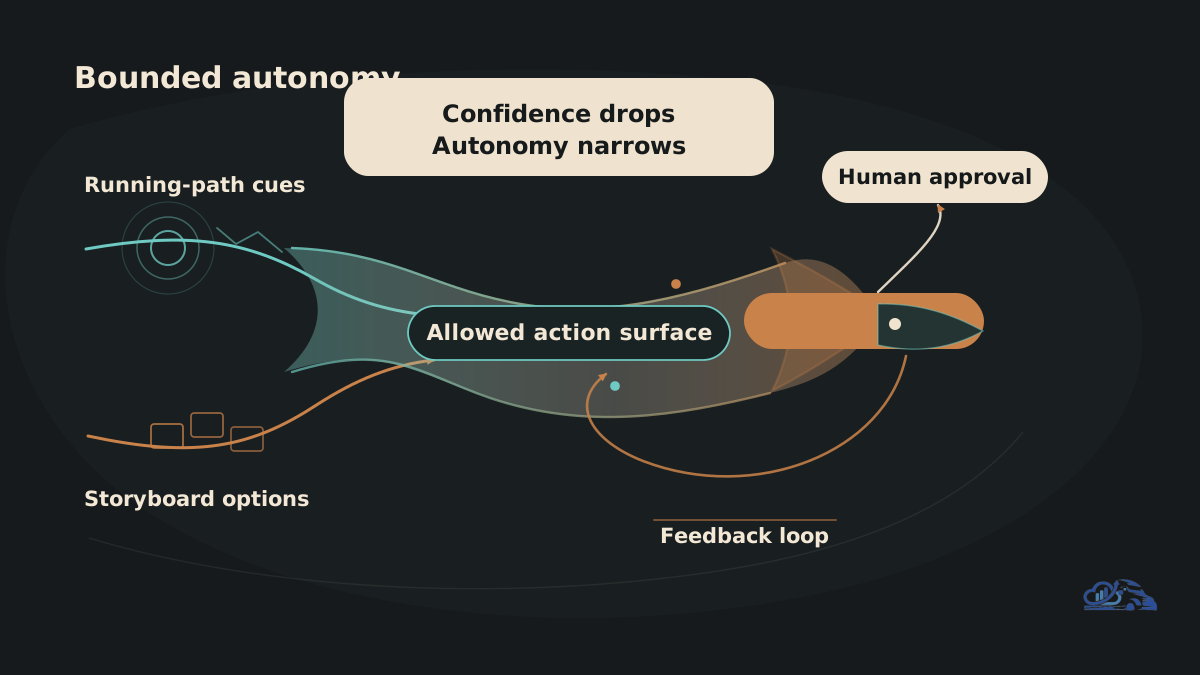
The following illustration summarizes three routes, one production gate:

Choose by workload and failure cost: Opus for complex autonomy, Sol for OpenAI-native and mathematical work, and Kimi for volume or deployment control. The fallback matters because production jobs don't stay inside neat benchmark categories.
| Workload | Van Data Team primary route | Fallback or escalation | Decision rationale |
|---|---|---|---|
| Long, multi-tool coding agent | Claude Opus 5 | GPT-5.6 Sol | Prefer Opus for complex tool loops; test Sol when the workflow is already OpenAI-native |
| High-stakes novel reasoning | Claude Opus 5 | Human review plus a second-model check | Use the strongest supplied reasoning evidence, with review matched to business risk |
| Codex-native repository work | GPT-5.6 Sol | Claude Opus 5 | Preserve integration fit and use Sol's Codex-environment strength |
| Math-heavy development or verification | GPT-5.6 Sol | Claude Opus 5 | Route to Sol when mathematical correctness drives acceptance |
| High-volume coding generation | Kimi K3 | Claude Opus 5 | Reduce token cost, then escalate rejected or ambiguous outputs |
| Frontend implementation | Kimi K3 | Claude Opus 5 | Use Kimi's arena leadership, then validate against tests and the component system |
| Open-weight or self-hosted deployment | Kimi K3 | Proprietary API only if policy permits | Kimi is the only open-weight option in this comparison |
| Prompts above 272K input tokens | Kimi K3 for cost control; Opus when quality requires it | GPT-5.6 Sol only when measured quality offsets repricing | Avoid accidental exposure to Sol's whole-request price change |
Put every model swap behind a production evaluation gate
A safe model swap uses the same jobs, tools, retrieval inputs, and acceptance rubric for every candidate. At Van Data Team, we would gate the change with these controls:
- Build a representative evaluation set from real production jobs, including common work, edge cases, and known failures.
- Record accepted-output accuracy, cost per accepted outcome, median and tail latency, tool failures, and human escalation rate.
- Keep prompts, tool permissions, retrieval context, and retry policy fixed unless the test is explicitly evaluating them.
- Define promotion and rollback rules before results arrive. Don't move the goalposts after seeing a leaderboard.
- Shadow the candidate first, then use a controlled canary route with a fallback model and human escalation.
- Review traces, not only final answers. A correct result reached through unsafe tool calls is still a failed run.
The production AI agent operations playbook provides the wider operating pattern. If you need a concrete model-routing plan, a scoped workflow review should return a workload map, evaluation set, fallback policy, telemetry plan, and implementation scope. Van Data Team's founder-led delivery model keeps those decisions and the build in one loop.
The routing decision matters more than the leaderboard
The right Kimi K3 vs Opus 5 vs GPT-5.6 Sol choice is a routing policy, not a permanent vendor verdict. Opus is the strong default for complex agentic work and high-stakes reasoning. Sol fits Codex-native and math-heavy jobs. Kimi controls cost and supports open-weight deployment.
Start with representative jobs, fixed acceptance criteria, and explicit failure recovery. Measure cost per accepted outcome alongside accuracy, latency, tool reliability, and escalation. Then promote the winner by workload, keep a fallback, and preserve human review where the downside is material.
If you want to turn this comparison into an operating route, scope a production model policy. The useful output is a tested workload matrix, fallback design, observability plan, and rollback rule your team can run after launch.
Article FAQ
Questions readers usually ask next.
These short answers clarify the practical follow-up questions that often come after the main article.
Need a similar system?
If this article maps to a workflow your team already operates, the next step is usually a scoped review of the system, constraints, and rollout path.
Book your free workflow review here.
Related articles
View all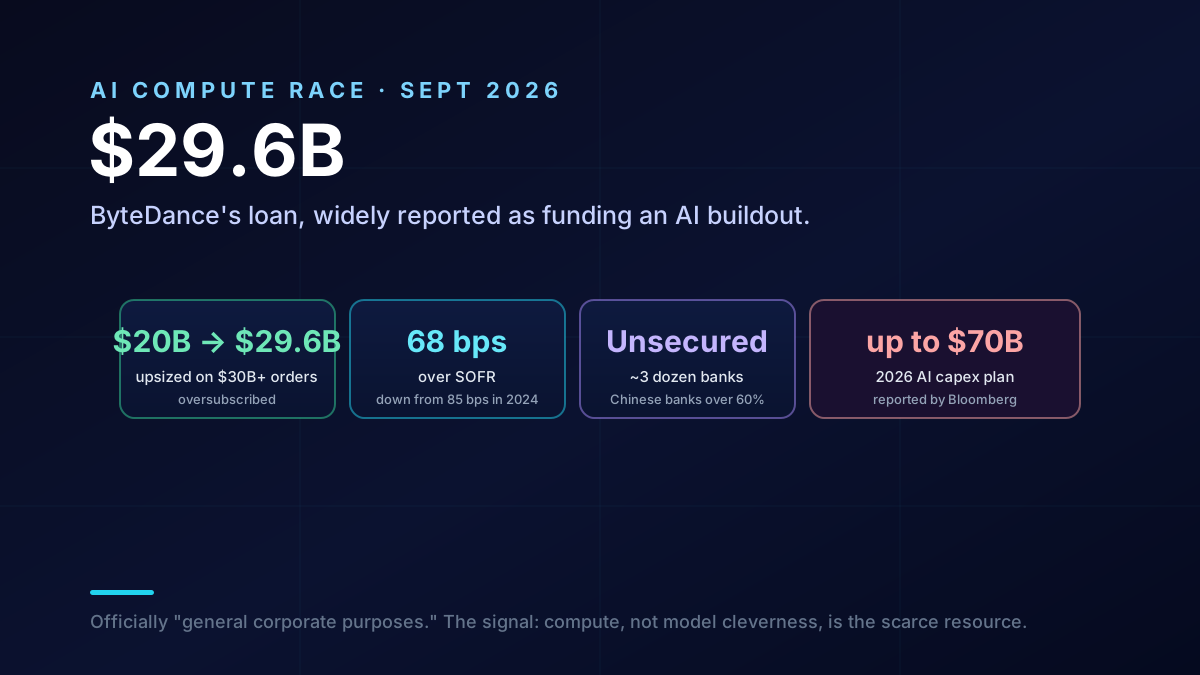
The ByteDance Loan: $29.6B Fueling an AI Buildout
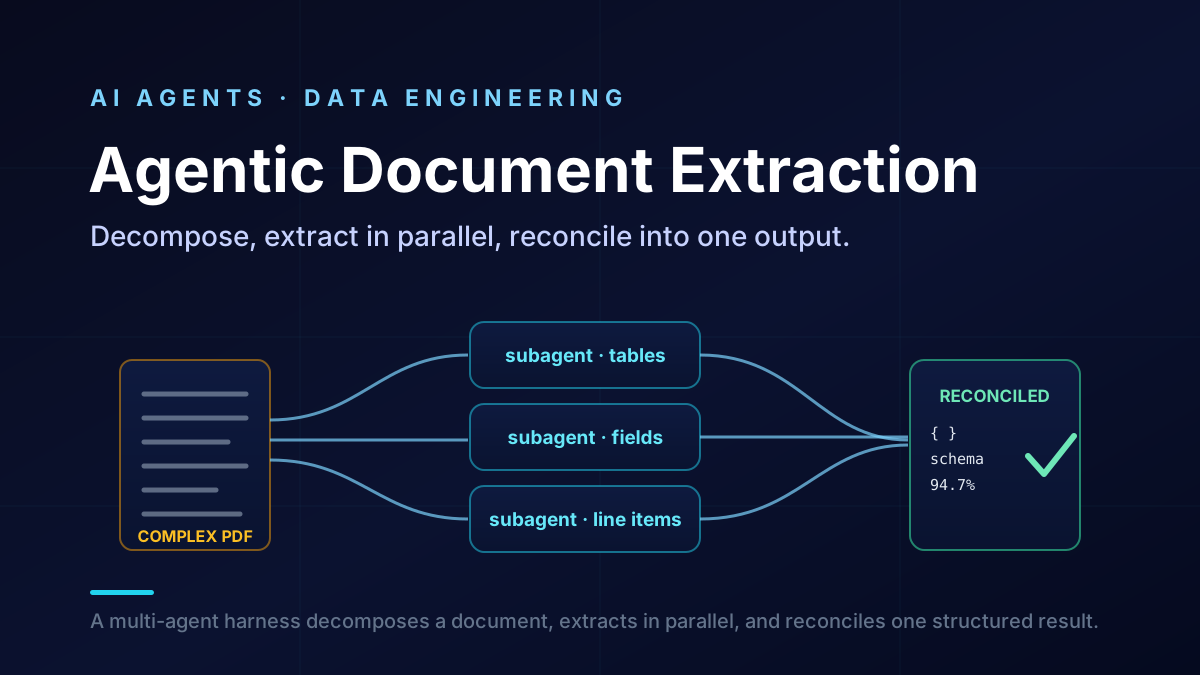
Agentic Document Extraction and Databricks Precision Mode
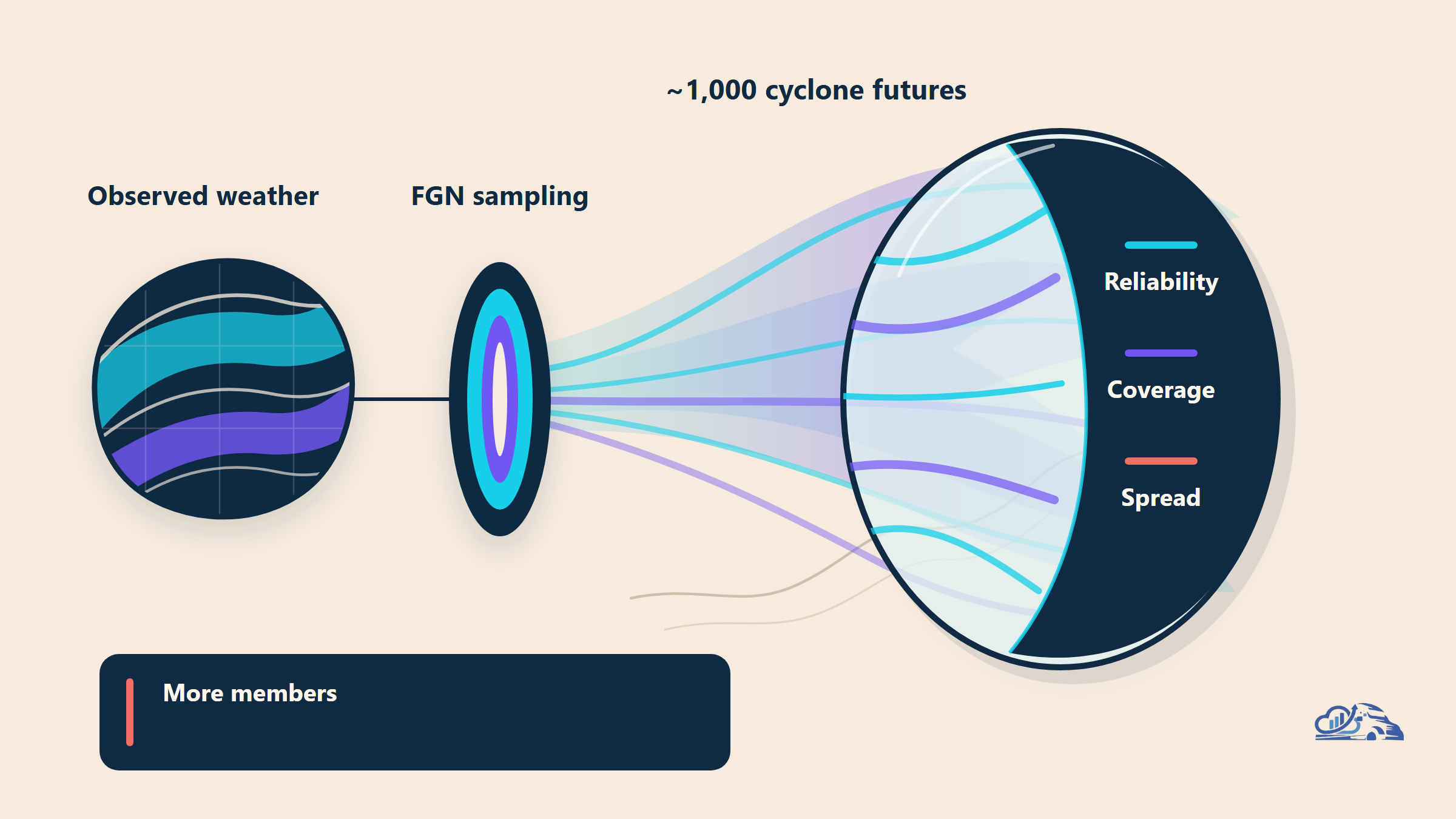
WeatherNext: Evaluating AI Cyclone Forecasting