August 25, 2026
OpenAI's Jalapeño Chip: First Inference Benchmarks
OpenAI published the first benchmarks for its custom Jalapeño inference chip. Here is what the numbers say, and what they mean if you build on OpenAI.
Article focus
OpenAI released the first measured benchmarks for Jalapeño, its custom inference chip, claiming large efficiency gains over commercial GPUs, though the silicon isn't deployed yet and the numbers are OpenAI's own.
Section guide
OpenAI published the first measured benchmarks for Jalapeño, its custom inference chip, claiming large efficiency and latency gains over commercial GPUs, though the silicon isn't deployed yet and the numbers are its own. On August 25, 2026, OpenAI shared Jalapeño's first results, run on the public SemiAnalysis InferenceX benchmark. The headline metric here is efficiency per watt, because that is what decides inference economics at scale. At Van Data Team, we help teams read signals like this without over-reacting to a benchmark.
Key Takeaways
- On August 25, 2026, OpenAI published the first benchmarks for its Jalapeño inference chip, run on the public SemiAnalysis InferenceX benchmark.
- OpenAI reports 1.5 to 1.9 times more work per watt at peak throughput and 1.7 to 3.6 times lower end-to-end latency than the comparison systems, with up to 2.1 to 4.1 times higher performance on interactive workloads.
- The gains held across three open models, GPT-OSS 120B, DeepSeek R1 670B, and Kimi K2.5 1T, suggesting a chip-level advantage rather than a model-specific trick.
- Two honest caveats: these are OpenAI's own numbers pending independent testing, and the chip ships in very small volumes at the end of 2026, with real deployment in 2027.
- Van Data Team's recommendation: treat this as a strategic signal about first-party silicon and vendor choice, not a reason to change what you build today.
What Did OpenAI Actually Announce?
OpenAI announced measured benchmark results for Jalapeño, its first in-house AI inference chip, not a product you can buy or use yet.
Reported fact: On August 25, 2026, OpenAI published Jalapeño's first benchmark results, measured on the public SemiAnalysis InferenceX benchmark. On its own numbers, Jalapeño delivered 1.5 to 1.9 times more AI work per watt at peak throughput and 1.7 to 3.6 times lower end-to-end latency than the comparison systems, which were NVIDIA Blackwell-class accelerators. For highly interactive workloads, OpenAI reports 2.1 to 4.1 times higher performance, and on GPT-OSS 120B specifically, about 1,400 tokens per second per user.
There's a headline efficiency figure too: at matched decoding speed, OpenAI claims Jalapeño reaches 54 to 104 times the token throughput per kilowatt of the best available accelerator, depending on the model. That number is striking, but read the qualifier, "at matched decoding speed," carefully, because it describes a specific operating point, not a blanket speedup.
Van Data Team analysis: The important framing is that OpenAI led with efficiency per watt, the same metric that's now driving every serious inference platform. A chip that serves more tokens per kilowatt directly lowers the cost of running models at scale. That's why a first-party inference chip is a bigger deal than a faster training GPU: inference is the recurring bill, and this aims straight at it.
Why Does the Jalapeño Benchmark Matter?
It matters because it's the first public evidence that OpenAI's in-house silicon can compete with, and on these numbers beat, the incumbent GPUs on production inference.
Until now, OpenAI's custom-chip effort was a roadmap and a rumor. A measured benchmark on a public test, across multiple open models, is a different kind of claim. It says the co-designed hardware works, at least on the workloads OpenAI chose to show. That moves the story from "OpenAI is trying to build a chip" to "OpenAI has a chip with real numbers."
The cross-model result is the quietly important part. Because the gains showed up on GPT-OSS 120B, DeepSeek R1 670B, and Kimi K2.5 1T, three very different third-party architectures, the advantage looks like a property of the chip and its serving stack, not a trick tuned to one model. That's what makes it credible rather than cherry-picked.
Van Data Team analysis: This is the same efficiency race we covered with NVIDIA's Vera Rubin NVL72, now with a new entrant building its own silicon instead of buying it. The competition is healthy: when the largest model provider designs chips to cut its own inference bill, everyone who serves tokens benefits from the pressure it puts on price and efficiency.
How Big Are the Efficiency Gains, Really?
They're large on OpenAI's own benchmarks, but the honest answer requires reading the fine print, because the numbers span a wide range and a careful qualifier.
- Work per watt: 1.5 to 1.9 times more than the comparison systems at peak throughput, a solid generational-style gain.
- End-to-end latency: 1.7 to 3.6 times lower, which matters most for interactive, agent-style workloads.
- Interactive performance: up to 2.1 to 4.1 times higher on the most demanding, low-latency cases.
- Throughput per kilowatt: 54 to 104 times the best accelerator, but only "at matched decoding speed," a specific operating point, not a general claim.
Van Data Team analysis: Hold the two kinds of numbers apart. The 1.5-to-4x figures describe broad, general performance, and they're impressive but believable. The 54-to-104x figure is real but narrow: it applies at a matched-decoding-speed operating point, where efficiency comparisons can look dramatic. Quoting the big number without its qualifier is how a fair benchmark turns into hype, so we won't.
The Jalapeño Benchmark Numbers at a Glance
The claims are easiest to weigh side by side. The table lists what OpenAI reported for Jalapeño against Blackwell-class accelerators, with the honest scope on each row.
| Metric | OpenAI's reported Jalapeño result | Note |
|---|---|---|
| Work per watt (peak) | 1.5 to 1.9x more | Broad, believable generational gain |
| End-to-end latency | 1.7 to 3.6x lower | Matters most for agent-style workloads |
| Interactive performance | Up to 2.1 to 4.1x higher | On the most demanding low-latency cases |
| Throughput per kilowatt | 54 to 104x | Only "at matched decoding speed" |
| GPT-OSS 120B speed | ~1,400 tokens/sec/user | Single-model data point |
| Availability | Not shipping | Small volumes late 2026, scale in 2027 |
Van Data Team analysis: Read the table top to bottom and the story is consistent: real, large efficiency gains, one eye-catching number that needs its qualifier, and a chip you can't use yet. That's a strong first disclosure, not a finished product. The honest summary is "promising, unshipped, and OpenAI's own numbers," which is exactly how you should file it.
Is Jalapeño Available to Use Today?
No, and this is the caveat that most reactions skip. Jalapeño is a benchmark disclosure, not a shipping product.
OpenAI estimated the chip would deploy in very small volumes at the end of 2026, with more significant rollout in 2027. So nothing about your OpenAI API usage changes today because of this announcement. The serving-economics and latency improvements that could eventually flow to OpenAI's endpoints are a forward-looking possibility, not a live benefit you can plan a launch around this quarter.
That gap between benchmark and deployment is normal for custom silicon, which takes time to manufacture, validate, and scale. It's also why the responsible read is to treat this as direction, not availability.
Van Data Team analysis: The trap is pricing a roadmap into today's plans. If cheaper OpenAI inference is a year or two out, you don't rebuild around it now; you note the trend and keep your architecture flexible. The teams that get burned are the ones that treat a benchmark as a shipping date.
What Does Jalapeño Mean for Teams Building on OpenAI?
In the near term, little changes; in the long term, it points to cheaper, faster inference on OpenAI's endpoints and a shift in who makes AI hardware. Both are worth planning around, differently.
- Near-term serving economics: unchanged today, because the chip isn't deployed, so don't budget for lower token costs yet.
- Long-term token economics: if Jalapeño delivers at scale, OpenAI can cut its own inference cost, which can flow to API pricing and latency over time.
- Vendor strategy: OpenAI joins Google, Amazon, and Meta in designing first-party AI silicon, so NVIDIA is no longer the only road to serving large models.
- Portability still wins: the more the hardware layer diversifies, the more valuable it is to keep your agents and pipelines model- and provider-portable.
Van Data Team analysis: The strategic signal is bigger than the benchmark. When the largest model provider co-designs its own inference chip, the industry's dependence on a single GPU vendor loosens, and the long-run direction is more inference capacity at lower cost. For anyone building on these APIs, that's a tailwind, as long as you design so you can ride it rather than lock yourself to one provider's assumptions, the same portability discipline behind our production AI agent ops playbook.
Should You Change Your Architecture Because of Jalapeño?
No. The right response to a benchmark of unshipped hardware is to stay measured and portable, not to re-architect around a chip you can't use yet.
The durable move is the same one that pays off regardless of which silicon wins: design agents and pipelines that measure their own token cost and can move between models and providers. Then every efficiency gain in the market, whether it comes from OpenAI's Jalapeño, NVIDIA's next platform, or a smaller model, lands as a margin improvement rather than a migration project. You capture the upside without betting on any single vendor's roadmap.
Van Data Team analysis: Efficiency is compounding across the whole industry right now, and no one can predict which provider leads in two years. The winning posture isn't to guess; it's to build so that you benefit whoever wins. Instrument your token economics, keep your stack portable, and treat announcements like Jalapeño as confirmation that inference is getting cheaper, not as a cue to chase one chip. This is the cost discipline we bring to AI agent development cost.
How Should a Team Respond to News Like This?
Respond by updating your mental model, not your codebase. A benchmark like this should sharpen how you plan, without triggering a rebuild.
- Note the trend: inference efficiency is improving fast across multiple vendors, so your per-token costs should keep falling.
- Don't price in the roadmap: keep budgeting on today's real prices, not on a chip shipping in 2027.
- Keep providers swappable: make sure you could move models or vendors without a rewrite, so you can capture whoever leads.
- Instrument your costs: measure tokens and latency per task, so you can actually see efficiency gains when they arrive.
- Revisit quarterly: re-check the landscape each quarter, because first-party silicon will keep shifting the economics.
- Watch for independent numbers: wait for third-party benchmarks before you treat any vendor's efficiency claim, OpenAI's included, as settled fact rather than a promising signal.
This is a planning exercise, not an engineering project. The value of a benchmark like Jalapeño is the direction it confirms, cheaper inference, more hardware competition, not any single number in the press release. Keep your architecture flexible, and you turn every one of these announcements into a future discount rather than a scramble, much like the guardrail discipline behind managing the hidden energy cost of AI agents.
How Van Data Team Helps
Van Data Team helps teams build AI systems that benefit from hardware progress without betting on it. We start by instrumenting your agents and pipelines so token cost and latency are visible, which turns vague "AI is expensive" worries into a specific, trackable map you can act on with confidence.
From there, we keep your stack portable across models and providers, so a gain from Jalapeño, a new NVIDIA platform, or a smaller model each lands as lower cost on a system you already understand. If you want help, our AI agent development and data pipeline development work covers the infrastructure this sits inside. The goal is simple: read signals like Jalapeño clearly, and build so that whoever wins the silicon race, your economics improve. A benchmark is a headline; a portable, well-measured system is what actually turns falling inference prices into your margin, quarter after quarter, no matter whose chip is fastest that year.
Article FAQ
Questions readers usually ask next.
These short answers clarify the practical follow-up questions that often come after the main article.
Need a similar system?
If this article maps to a workflow your team already operates, the next step is usually a scoped review of the system, constraints, and rollout path.
Book your free workflow review here.
Related articles
View all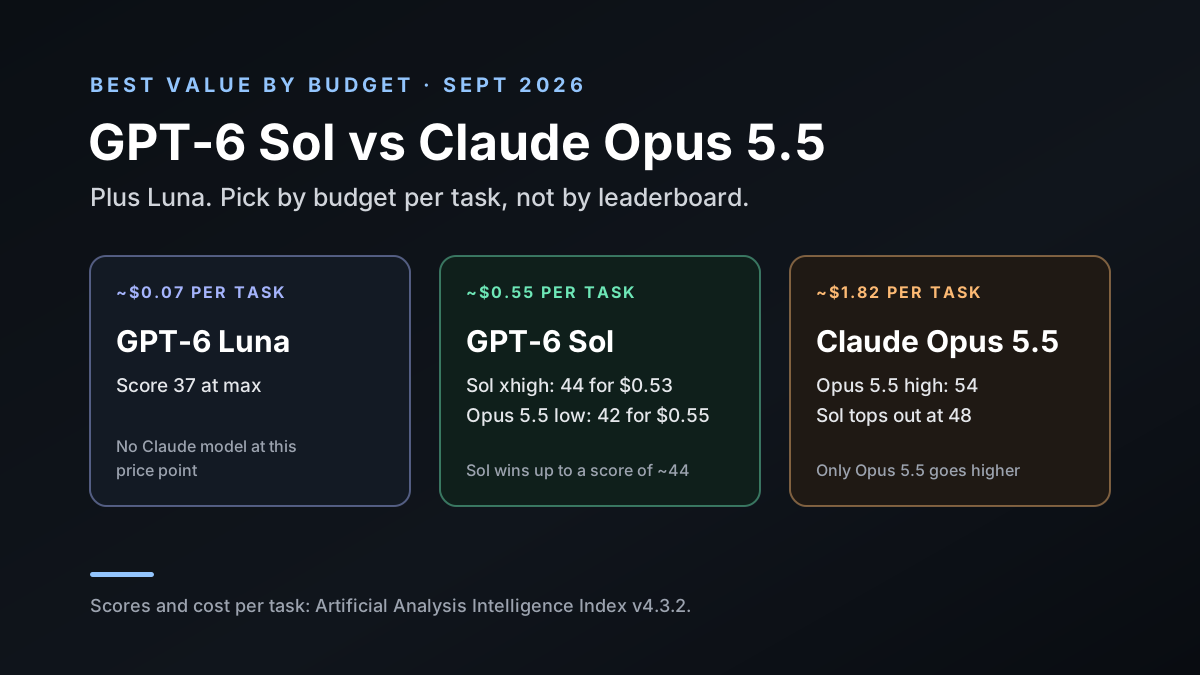
GPT-6 Sol vs Claude Opus 5.5, Plus Luna: Best Value per Task
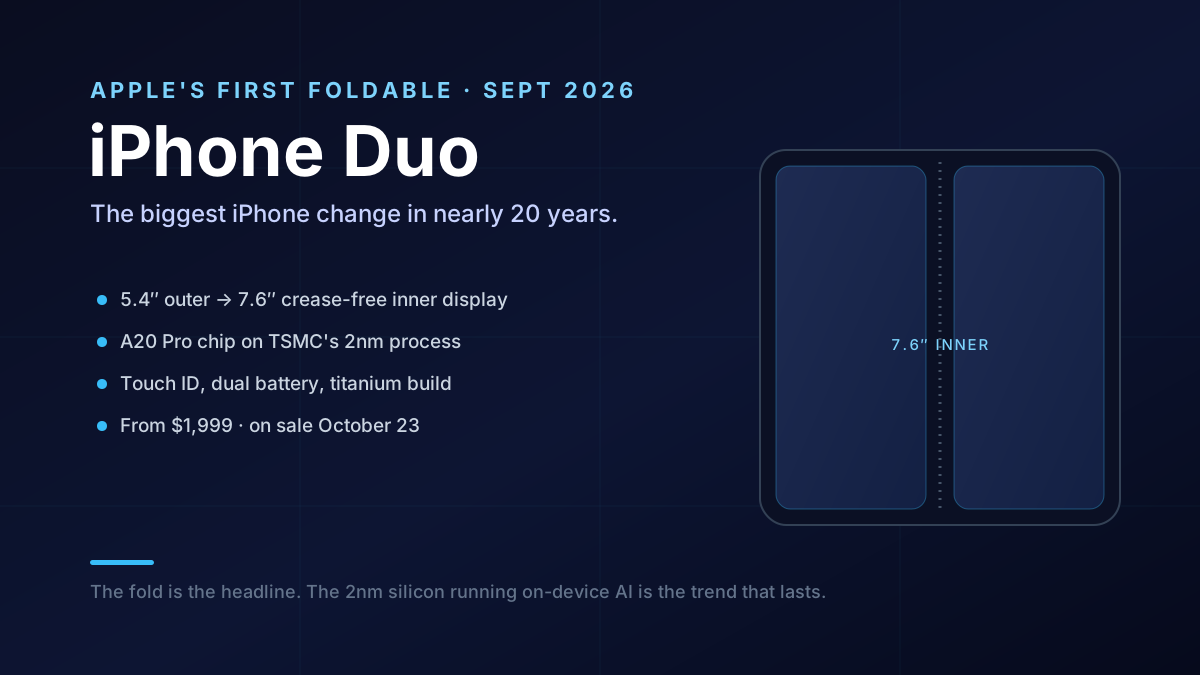
The iPhone Duo: Apple's First Foldable iPhone
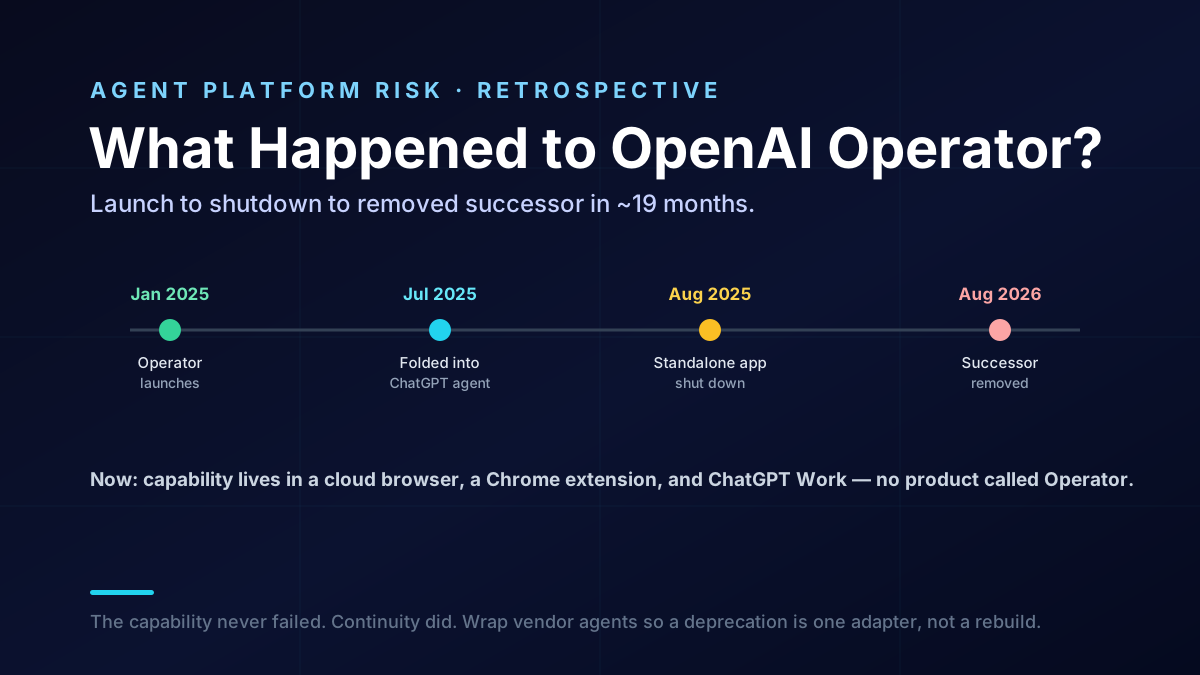
What Happened to OpenAI Operator?